Can We Really Exercise Free Will?

  • Christian Chat is a moderated online Christian community allowing Christians around the world to fellowship with each other in real time chat via webcam, voice, and text, with the Christian Chat app. You can also start or participate in a Bible-based discussion here in the Christian Chat Forums, where members can also share with each other their own videos, pictures, or favorite Christian music.

    If you are a Christian and need encouragement and fellowship, we're here for you! If you are not a Christian but interested in knowing more about Jesus our Lord, you're also welcome! Want to know what the Bible says, and how you can apply it to your life? Join us!

    To make new Christian friends now around the world, click here to join Christian Chat.
Please explain or clarify. Since some have perished and some continue down that path, does that mean that some are beyond His ability to save? That He who can make an axe head swim, does not have the power to save all people and cannot bring some to faith – even though He isn't willing that any should perish?

"He isn't willing that any should perish."

God did not create some men to be predestined to the Lake of Fire, as some profess it to be.
 
Should be interesting! :)

We'll see. But God put a bug in my ear when recently reading Rev 21, and a light came on in my attic. :) And also another important consideration for me is G.K. Beale's work The Temple and the Church's Mission looms large in my mind. One of his major premises (with which I totally agree) is that God's Temple existed here on earth long before Solomon built it! It existed on the east side of the Garden of Eden. Beale's argument is quite compelling -- most especially when we study Rev 21-22 to see what the Temple will look like in the Restored Eden (New Jerusalem) of the New Eternal Order. Of course, this is a huge topic unto itself, so I won't be going into too much detail down the road. This topic deserves its own thread. But Beale's work was an eye-opener for me and he approaches it from the New Covenant perspective.
 
  • Like
Reactions: BillyBob
And I did not ask the question based on predestination!


Oh, my answer was based upon the common argument as to why it says that God is not willing to have anyone perish.

Well, what I said?

............ Perish the thought!


grace and peace .......
 
"He isn't willing that any should perish."

God did not create some men to be predestined to the Lake of Fire, as some profess it to be.

Not even Judas, heh? :rolleyes: God hasn't made any wicked for the day of evil (Prov 16:14), has he?
 
  • Like
Reactions: Rosemaryx
Not even Judas, heh? :rolleyes: God hasn't made any wicked for the day of evil (Prov 16:14), has he?


:unsure: ... Huh?

Proverbs 16:14, reads:

A king’s wrath is a messenger of death,
but the wise will appease it.

You sure that verse was your pick?
 
Please explain or clarify. Since some have perished and some continue down that path, does that mean that some are beyond His ability to save? That He who can make an axe head swim, does not have the power to save all people and cannot bring some to faith – even though He isn't willing that any should perish?

Im gonna explain this too you in human terms so.maybe its easier to see. If you have 4 kids and 3 turn out good and follow Christ you dont hate the one who dosent you still love them and wish they would turn around. God is father to is all. So of course he wishes we would all be saved.
 
Im gonna explain this too you in human terms so.maybe its easier to see. If you have 4 kids and 3 turn out good and follow Christ you dont hate the one who dosent you still love them and wish they would turn around. God is father to is all. So of course he wishes we would all be saved.

Stay tuned for the regularly scheduled response..... oops I mean program.
 
Im gonna explain this too you in human terms so.maybe its easier to see. If you have 4 kids and 3 turn out good and follow Christ you dont hate the one who dosent you still love them and wish they would turn around. God is father to is all. So of course he wishes we would all be saved.
Even as Creator Who owns every soul, God does not claim to be the Father of all. Jesus said
some were the children of the wicked one. Only those born again can claim God as a Father.
It is false religions who like to say everyone is God's child. It certainly is not Biblical.

He came to His own, and His own did not receive Him. But to all who did receive Him, to those
who believed in His name, He gave the right to become children of God— children born not
of blood, nor of the desire or will of man, but born of God.
 
  • Like
Reactions: Rosemaryx
Stay tuned for the regularly scheduled response..... oops I mean program.
Yes, the Biblical response is different than what was offered.

This is after all, the Bible discussion forum, not, let's discuss what we wish the Bible said instead.
 
Please explain or clarify. Since some have perished and some continue down that path, does that mean that some are beyond His ability to save? That He who can make an axe head swim, does not have the power to save all people and cannot bring some to faith – even though He isn't willing that any should perish?
There is no "inability" on the part of God's power to save. You and I (and others who have posted in this thread) are evidence to that truth.

The issue is man continuously exerting his will over God's Will. God explains how He will bring mankind to salvation and man either believes or does not believe what God says:

Romans 1:

16 For I am not ashamed of the gospel of Christ: for it [the gospel of Christ] is the power of God unto salvation to every one that believeth; to the Jew first, and also to the Greek.

17 For therein is the righteousness of God revealed from faith to faith: as it is written, The just shall live by faith.

18 For the wrath of God is revealed from heaven against all ungodliness and unrighteousness of men, who hold the truth in unrighteousness;

19 Because that which may be known of God is manifest in them; for God hath shewed it unto them.

Those who hold (suppress/restrain) the truth in unrighteousness will not receive the blessing ... not because God is powerless ... but because of man's continued rejection of that which God has purposed to save mankind.

Remember the verse where Jesus told the pharisees and sadducees that God could raise up children unto Abraham from stones (Matt 3:9)?

In the case of unbelievers, it's not that God is powerless ... it is that God chooses not to ... and it's His prerogative to not do what you suggest.
.
 
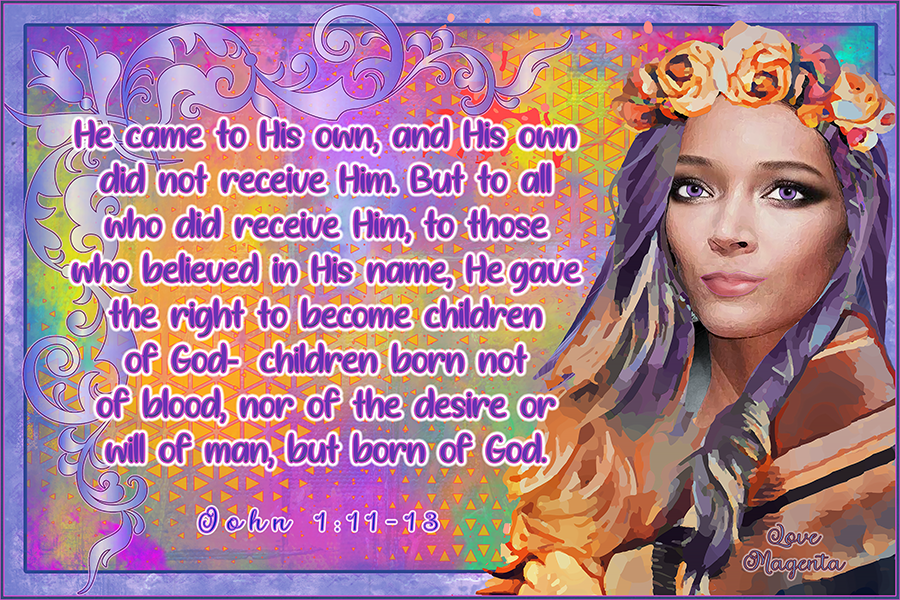
John1-11-13s.png

John 1 verses 11 - 13 He came to His own, and His own did not receive Him. But to all who did receive Him, to those who believed in His name, He gave the right to become children of God— children born not of blood, nor of the desire or will of man, but born of God.
 
In the case of unbelievers, it's not that God is powerless ... it is that God chooses not to ... and it's His prerogative to not do what you suggest.
I never intended to suggest that God should do anything, I would never do such a thing. And I never suggested that He is powerless. In fact, I argued just the opposite. And, I do agree with the underlined sentence that you posted.
I guess what I am saying is, since "it is that God chooses not to save some", then there must be more to the statement He isn't willing that any should perish, than is observed at first glance.
 
  • Like
Reactions: Cameron143
I never intended to suggest that God should do anything, I would never do such a thing. And I never suggested that He is powerless. In fact, I argued just the opposite. And, I do agree with the underlined sentence that you posted.
I guess what I am saying is, since "it is that God chooses not to save some", then there must be more to the statement He isn't willing that any should perish, than is observed at first glance.
Ezekiel 33:11 Say unto them, As I live, saith the Lord GOD, I have no pleasure in the death of the wicked; but that the wicked turn from his way and live: turn ye, turn ye from your evil ways; for why will ye die, O house of Israel?


2 Peter 3:9-10 The Lord is not slack concerning his promise, as some men count slackness; but is longsuffering to us-ward, not willing that any should perish, but that all should come to repentance. But the day of the Lord will come as a thief in the night; in the which the heavens shall pass away with a great noise, and the elements shall melt with fervent heat, the earth also and the works that are therein shall be burned up.

It's such a blessing that the day of the Lord did not come the day before you (or I) repented.


Deut 29:4
click
 
Re: "Spiritual Death" - or Gen2 death:

Firstly, as some have noted, the language in Gen2:17 seems to present 2 deaths. This is interpretational. Others assert that the language is simply emphasizing death as some translations have concluded. The grammar is not unusual in the Scriptures Gen20:7; Gen26:11; 1Kings2:37; Jer26:8.

It's been a long time, and the following took a bit of work. It should be double-checked, but this is the basics of how these 3 systems view death in Gen2:17, which is really the main focus here. And they are not the only three systems and views.

This is going to affect nearly every concept of non-physical death thereafter in Scripture. If we don't see death the same, I've no clue how we see fallen human volition and other faculties the same and then the action of God's Saving Grace the same. In addition, we don't even see the original structure of man the same way (Dichot vs. Trichot).

What's the point of all of this haggling? We're not even speaking the same language even if we use the same words and phrases. If we redeemed the rest of our days defining words maybe we'd get somewhere. I may go back to doing just that.

Calvin’s Dichotomous View of Humanity and Spiritual Death
  • Humans are structurally Dichotomous = body and soul/spirit.
  • The soul/spirit includes all immaterial faculties — thought, will, conscience, and spiritual capacity.
  • Genesis 2 Death
    • Relational Death — separation from God due to sin, resulting in total depravity* and enslavement to sin of the soul/spirit and all immaterial faculties.
    • Physical Death — the eventual separation of body and soul/spirit as a consequence of sin.
  • Salvation
    • The Spirit regenerates the soul/spirit of God's Elect
    • God’s Elect then understand and believe the Gospel
    • Regeneration precedes Faith

Arminius’s Dichotomous View of Humanity and Spiritual Death
  • Humans are structurally Dichotomous = body and soul/spirit.
  • The soul/spirit includes all immaterial faculties — thought, will, conscience, and spiritual capacity.
  • Genesis 2 Death
    • Relational Death — separation from God due to sin, resulting in relational incapacity and disordered volitional resistance across the soul/spirit’s faculties.
    • Physical Death — the eventual separation of body and soul/spirit as a consequence of sin.
  • Salvation
    • The Spirit initiates prevenient grace, progressively enabling the soul/spirit to willfully respond
    • Individuals understand and choose to believe the Gospel through prevenient grace-enabled volition
    • Faith precedes regeneration

Thieme’s Trichotomous/Dichotomous View of Humanity and Spiritual Death
  • Humans at creation were Trichotomous = body and soul and spirit.
  • The soul includes all immaterial faculties — mentality, volition, conscience, and self-consciousness.
  • Genesis 2 Death:
    • Death of the Human Spirit — Fallen man is Dichotomous = body and soul, separation from God, resulting in total depravity* and inability to fully perceive divine truth.
    • Physical Death — the eventual separation of body and soul as a consequence of Adam’s original sin.
  • Salvation:
    • The Holy Spirit temporarily takes the place of the non-existent human spirit so man can perceive the Gospel as Divine Truth
    • Man chooses to believe or reject the Gospel
    • Faith precedes regeneration
*Total Depravity

Calvin: Depravity and Inability are absolute until sovereign grace intervenes. The Spirit regenerates the elect, enabling faith.

Arminius: The will is bound by depravity. Inability is real but reversible. Prevenient grace internally enables the will to respond. Regeneration follows faith, but grace precedes and empowers it.

Thieme: The soul retains volitional capacity even in spiritual death. The Holy Spirit makes the gospel clear, allowing the unbeliever to choose faith. Regeneration follows belief.

 
  • Like
Reactions: cv5
Thieme: The soul retains volitional capacity even in spiritual death. The Holy Spirit makes the gospel clear, allowing the unbeliever to choose faith. Regeneration follows belief.

I will go with option #3 it is the biblical one.
 
Re: "Spiritual Death" - or Gen2 death:

Firstly, as some have noted, the language in Gen2:17 seems to present 2 deaths. This is interpretational. Others assert that the language is simply emphasizing death as some translations have concluded. The grammar is not unusual in the Scriptures Gen20:7; Gen26:11; 1Kings2:37; Jer26:8.

It's been a long time, and the following took a bit of work. It should be double-checked, but this is the basics of how these 3 systems view death in Gen2:17, which is really the main focus here. And they are not the only three systems and views.

This is going to affect nearly every concept of non-physical death thereafter in Scripture. If we don't see death the same, I've no clue how we see fallen human volition and other faculties the same and then the action of God's Saving Grace the same. In addition, we don't even see the original structure of man the same way (Dichot vs. Trichot).

What's the point of all of this haggling? We're not even speaking the same language even if we use the same words and phrases. If we redeemed the rest of our days defining words maybe we'd get somewhere. I may go back to doing just that.

Calvin’s Dichotomous View of Humanity and Spiritual Death
  • Humans are structurally Dichotomous = body and soul/spirit.
  • The soul/spirit includes all immaterial faculties — thought, will, conscience, and spiritual capacity.
  • Genesis 2 Death
    • Relational Death — separation from God due to sin, resulting in total depravity* and enslavement to sin of the soul/spirit and all immaterial faculties.
    • Physical Death — the eventual separation of body and soul/spirit as a consequence of sin.
  • Salvation
    • The Spirit regenerates the soul/spirit of God's Elect
    • God’s Elect then understand and believe the Gospel
    • Regeneration precedes Faith

Arminius’s Dichotomous View of Humanity and Spiritual Death
  • Humans are structurally Dichotomous = body and soul/spirit.
  • The soul/spirit includes all immaterial faculties — thought, will, conscience, and spiritual capacity.
  • Genesis 2 Death
    • Relational Death — separation from God due to sin, resulting in relational incapacity and disordered volitional resistance across the soul/spirit’s faculties.
    • Physical Death — the eventual separation of body and soul/spirit as a consequence of sin.
  • Salvation
    • The Spirit initiates prevenient grace, progressively enabling the soul/spirit to willfully respond
    • Individuals understand and choose to believe the Gospel through prevenient grace-enabled volition
    • Faith precedes regeneration

Thieme’s Trichotomous/Dichotomous View of Humanity and Spiritual Death
  • Humans at creation were Trichotomous = body and soul and spirit.
  • The soul includes all immaterial faculties — mentality, volition, conscience, and self-consciousness.
  • Genesis 2 Death:
    • Death of the Human Spirit — Fallen man is Dichotomous = body and soul, separation from God, resulting in total depravity* and inability to fully perceive divine truth.
    • Physical Death — the eventual separation of body and soul as a consequence of Adam’s original sin.
  • Salvation:
    • The Holy Spirit temporarily takes the place of the non-existent human spirit so man can perceive the Gospel as Divine Truth
    • Man chooses to believe or reject the Gospel
    • Faith precedes regeneration
*Total Depravity

Calvin: Depravity and Inability are absolute until sovereign grace intervenes. The Spirit regenerates the elect, enabling faith.

Arminius: The will is bound by depravity. Inability is real but reversible. Prevenient grace internally enables the will to respond. Regeneration follows faith, but grace precedes and empowers it.

Thieme: The soul retains volitional capacity even in spiritual death. The Holy Spirit makes the gospel clear, allowing the unbeliever to choose faith. Regeneration follows belief.

Thank you putting this together, it is very clearly presented. :)
10/10
Sorry occupational habit. lol
 
Im gonna explain this too you in human terms so.maybe its easier to see. If you have 4 kids and 3 turn out good and follow Christ you dont hate the one who dosent you still love them and wish they would turn around. God is father to is all. So of course he wishes we would all be saved.
Thanks for your thoughts.
And, I agree that God finds no joy in the fact that some are lost. However, scripture does speak of Him giving a select group to Christ. It is Christ and the Spirit working together to insure that, of these who have been set aside as belonging to Him, that none are lost.
 
Yes, but what you are calling foreknowledge, I have explained I see as omniscience. Foreknowledge is about who He knows, not what He knows and He does make decisions on the basis of His foreknowledge as evident in Rom.8. This is why there is no foreknowledge concerning unbelievers and hence no predestination, calling, justification or glorification. The Lord God does not know unbelievers in a relational sense.

Romans 8:29-30
For those whom he foreknew he also predestined to be conformed to the image of his Son, in order that he might be the first-born among many brethren. And those whom he predestined he also called; and those whom he called he also justified; and those whom he justified he also glorified.

God decided, from His omniscience, He would save believers. Seeing He would have a bunch of people before Him who from their own volition would love Him, just as two thirds of the angels of their own volition remained faithful and just as Christ of His own volition remained faithful, would love Him in time and eternity, He decided what He would do with each of them. As far as God is concerned they were already saved so he is not choosing to save them, He is choosing what to do with the saved.

That's not what the text says. If the passage read: "For those whom God knew in eternity, he also predestined...", this would not change the sense of the passage whatsoever. The reason Paul used the prefix "pro" before "knew" is to make the point that God [fore]knew people BEFORE Time began. This passage has zero to do with God's prescience and everything to do with with his personal covenant of love, affection, intimacy with those whom He chose in eternity to save.

Are you going to suggest that Jesus will not possess the attribute of omniscience when on the last day he tells unbelievers that he never knew them (Mat 7:23)?