
Sounds like some Calvinists are suffering hardship because nobody else wants to play "hide the Biblically correct doctrine".Why do you, who who apparently hates sound doctrine, want to know so much?
Pity that.....


Sounds like some Calvinists are suffering hardship because nobody else wants to play "hide the Biblically correct doctrine".Why do you, who who apparently hates sound doctrine, want to know so much?
There are not many "stupid' calvies. The system is geared towards intellectualism.
A "smarter than thou" attitude is recommended in the calvie theory.


If the soul wasn't corrupted by sin, the flesh would influence the soul. Because both body and soul were corrupted, the soul influenced the flesh.[/QUOTE

Sounds like your still being abrupt.Sounds like some Calvinists are suffering hardship because nobody else wants to play "hide the Biblically correct doctrine".
Pity that.....

What constitutes the soul?Dear Cameron 143
Have you read about the doctrine of regeneration?
I don't think our soul influenced our flesh.
Kind regards
Clay
When scripture doesn't suffice, many employ an emotional and hypothetical appeal.
“This expression [of our Lord], “How often would I have gathered thy children together, and thou wouldest not,” set forth the ancient law of human liberty, because God made man a free [agent] from the beginning, possessing his own power, even as he does his own soul, to obey the behests (ad utendum sententia) of God voluntarily, and not by compulsion of God. For there is no coercion with God, but a good will [towards us] is present with Him continually. And therefore does He give good counsel to all. And in man, as well as in angels, He has placed the power of choice (for angels are rational beings), so that those who had yielded obedience might justly possess what is good, given indeed by God, but preserved by themselves” — Irenaeus
“If any one is truly religious, he is a man of God; but if he is irreligious, he is a man of the devil, made such, not by nature, but by his own choice.” — Ignatius of Antioch (c. 35AD – 107AD)
“There is, therefore, nothing to hinder you from changing your evil manner to life, because you are a free man.” — Melito of Sardis, c. 170AD
“And do not wonder that a man may become an imitator of God. He can, if he is willing.” — Mathetes (2nd century)
“It is therefore in the power of every one, since man has been made possessed of free-will, whether he shall hear us to life, or the demons to destruction.” — Shepherd of Hermas (c. 130–140 AD)
“Just as with men, who have freedom of choice as to both virtue and vice, so it is among the angels…Some free agents, you will observe, such as they were created by God, continued in those things for which God had made and over which he had ordained them; but some outraged both the constitution of their nature and the government entrusted to them.” — Athenagoras of Athens (c. 133–190 AD)
If, on the other hand, he would turn to the things of death, disobeying God, he would himself be the cause of death to himself. For God made man free, and with power of himself.” — Theophilus of Antioch (died c. 185 AD)
We…have believed and are saved by voluntary choice.” — Clement of Alexandria (c. 150–215 AD)
“I find, then, that man was constituted free by God. He was master of his own will and power… Man is free, with a will either for obedience or resistance.” — Tertullian (c. 160–225 AD)
“This is also clearly defined in the teaching of the church, that every rational soul has free will and volition….we are not forced by any necessity to act either rightly or wrongly.” — Origen of Alexandria (c. 185–254 AD)
“The liberty of believing or not believing is placed in free choice. In Deuteronomy, it says, ‘Look! I have set before your face life and death, good and evil. Choose for yourself life, that you may live.’” — Cyprian of Carthage (c. 200–258 AD)
When he had given man all things for his service, he willed that man alone should be free. And lest an unbounded freedom would lead man into peril, He had laid down a command.” — Novatian (c. 200–258 AD)
“All the creatures that God made, He made very good. And He gave to every individual the sense of free will, by which standard He also instituted the law of judgment…. And certainly whoever will, may keep the commandments.” — Archelaus (3rd century)
“Those [pagans] who decide that man does not have free will, but say that he is governed by the unavoidable necessities of fate, are guilty of impiety toward God Himself, making Him out to be the cause and author of human evils.” — Methodius (c. 260–312 AD)
“Every rational soul has naturally a good free-will, formed for the choice of what is good. But when a man acts wrongly, nature is not to be blamed; for what is wrong, takes place not according to nature, but contrary to nature.” — Eusebius of Caesarea (c. 263–339 AD)
“Does He not free all alike who invites all alike? Or does He thrust back or repel any one from the kindness of the supreme, who gives to all alike the power of coming to Him.” — Arnobius (c. 297–303 AD)
Brian Wagner: “There seems to have been no exceptions among early Christian writers to the orthodox teaching that man has been granted by God a free will to choose his destiny, and that salvation is available to all. The opposing view, that man is controlled by fate, could only be found in the Greek philosophical schools, Gnosticism, and Eastern mysticism during the first 300 years of Christianity. It is no wonder that the man who introduced Greek fatalism into Christianity should come from a Gnostic and Neo-Platonic background. Augustine’s theory differed from the Greek philosophers mainly by naming the CAUSE of fate — God’s mysterious will which must not be questioned, and cannot be understood by mortals. The impact of Augustine’s teaching probably would not have been nearly so great if Pelagius had not gone to the opposite extreme in renouncing Augustine.”
“You [Augustine] make God the author of our sins by asserting that He predestines some to salvation and others to damnation, as if human will has no role in its own choices. This is nothing but Manichaean determinism dressed in Christian garb.” — Julian of Eclanum (421AD)
“God’s grace indeed cooperates with our will, but it does not compel it. For if all is determined by divine predestination, why do we exhort men to strive for virtue, or why does Scripture command us to choose life? The human will must begin, and God completes.” — John Cassian (c. 425–429 AD)
“God invites all to salvation, and His grace is offered universally. The human will… retains the power to accept or reject” — De Gratia (c. 470–475 AD)
“The fact that they all agreed seems very credible, and their consensus could not be more clear: mankind has always had the free will to choose God…”
Tell it to the judge. You all were caught red handed.

If for once you actually made any sense I might be able to make a clear answer but you don't.
You can't answer the question even when the answer is in the verse I gave you.
Emotion is a function of the soul, not the body. The body expresses the pain we feel (ie through tears etc) it does not have it's source there. The bodies in hell will be burned to ash so no nerve endings, no physical pain only emotional pain of the soul.
I said the mind is in the soul in the very post you quoted but you make nonsense responses like "if the soul has no mind", something I have never even remotely intimated is true.
The soul is who we are, all we think and value and desire.
You seem to get very confused between the function of the physical body and the function of the immaterial soul.
What you showed made no sense. There is nothing about any "seed" in the verse.
I want to make things fit? You bet. Fit what the scriptures are actually saying not some mumbo jumbo ranting.
Have a nice day.
This @Cameron143 fellow sees fit to compartmentalize the Scriptures, defying the very purpose of the Book.
However, the truth is that there are no divisions, the Scriptures are a complete and harmonious whole.
And for some reason, many of these Calvinists enjoy playing the part of "Inquisitor" (of the Spanish sort), proffering inane questions in an attempt to stifle and obscure Biblical truth.
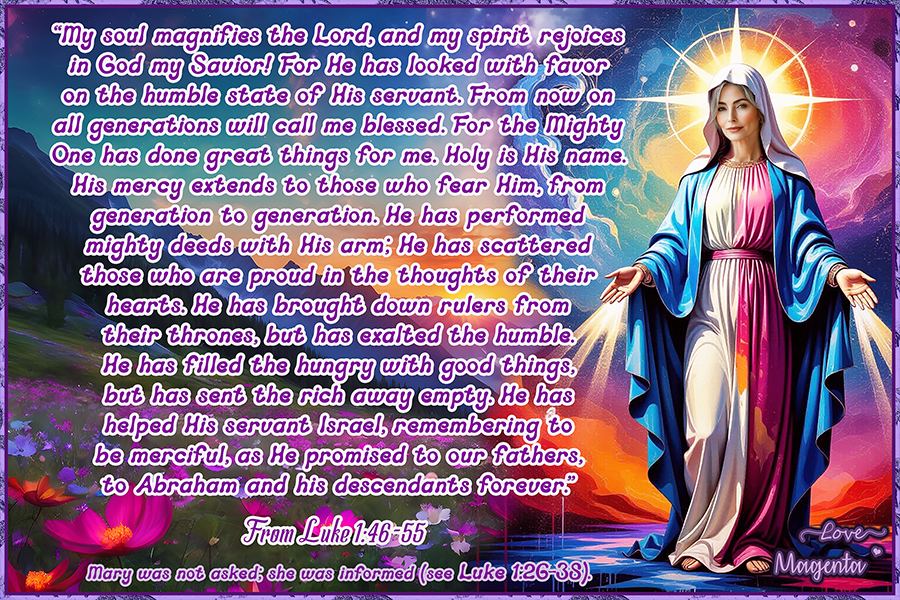
We still have that God blasphemer refusing to acknowledge what Scripture actually says of Mary.Mary has a such a high view of her sovereignty and freewill that she called God her Savior. Detect any humility there?
Try telling that to Balaam!
Num 23:12 12 So he [Balaam] answered and said, “Must I not take heed to speak what the Lord has put in my mouth?”
