Synagogue of Satan: Grieving my ignorance

  • Thread starter Thread starter 2fruition
  • Start date Start date
  • Christian Chat is a moderated online Christian community allowing Christians around the world to fellowship with each other in real time chat via webcam, voice, and text, with the Christian Chat app. You can also start or participate in a Bible-based discussion here in the Christian Chat Forums, where members can also share with each other their own videos, pictures, or favorite Christian music.

    If you are a Christian and need encouragement and fellowship, we're here for you! If you are not a Christian but interested in knowing more about Jesus our Lord, you're also welcome! Want to know what the Bible says, and how you can apply it to your life? Join us!

    To make new Christian friends now around the world, click here to join Christian Chat.
Status
Not open for further replies.
Well, Im not that close minded. I've been in a lot of denominations in my life,more than most people. I'm not one of those people that if you don't attend my church, or if you don't attend church at all, that you're of the devil. But if you haven't received Christ as your personal Savior, you're lost. That being said, God knows the heart, I don't. Ultimately, my job is to tell people about Christ and the Good News. And that's where my job ends. As the song goes, "I catch em', He cleans em".


yeah, a lot of Christians like to pretend to be persecuted.
it's confirmation bias.

they read scripture that says that Christians will be persecuted or historically have been and then they think that anyone having different beliefs or anything less than 100% compliance to their demands equates to them being persecuted.
 
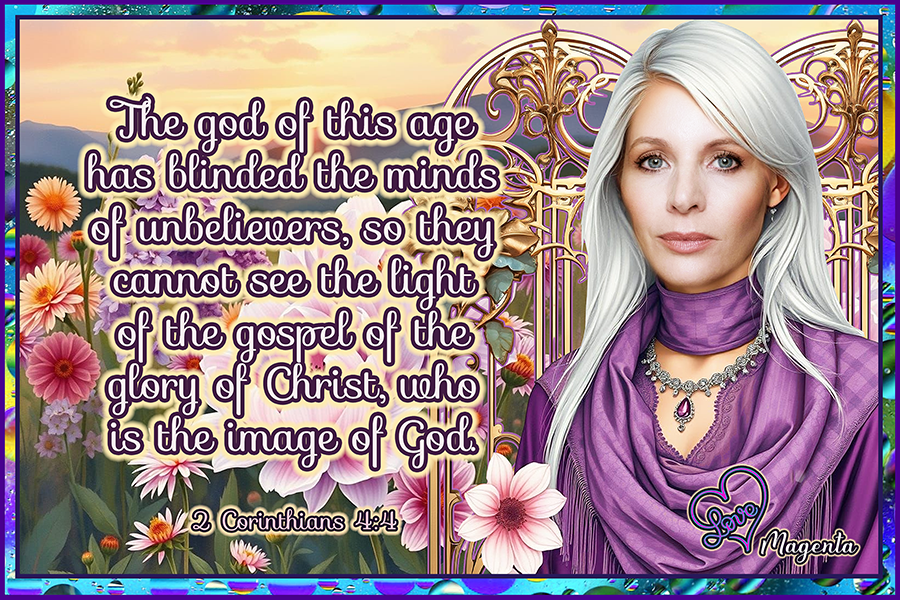
2-Corinthians-4-4.png

2 Corinthians 4 v 4 The god of this age has blinded the minds of unbelievers, so they cannot see the light of the gospel of the glory of Christ, who is the image of God.
 
  • Like
Reactions: Dude653 and ZNP
2-Corinthians-4-4.png

2 Corinthians 4 v 4 The god of this age has blinded the minds of unbelievers, so they cannot see the light of the gospel of the glory of Christ, who is the image of God.
people are allowed to have different beliefs and that doesn't necessarily mean they are bad people or worship Satan or deserve to be genocided or whatever
 
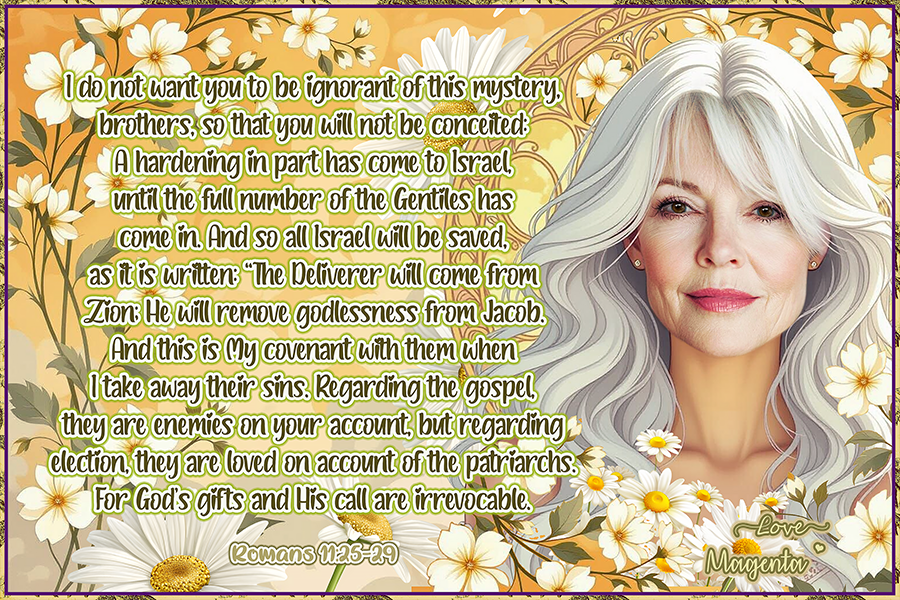
Romans11-25-29.png

Romans 11 v 25-29 ~ I do not want you to be ignorant of this mystery, brothers, so that you will not be conceited: A hardening in part has come to Israel, until the full number of the Gentiles has come in. And so all Israel will be saved, as it is written: “The Deliverer will come from Zion; He will remove godlessness from Jacob. And this is My covenant with them when I take away their sins. Regarding the gospel, they are enemies on your account, but regarding election, they are loved on account of the patriarchs. For God’s gifts and His call are irrevocable.
 
Romans11-25-29.png

Romans 11 v 25-29 ~ I do not want you to be ignorant of this mystery, brothers, so that you will not be conceited: A hardening in part has come to Israel, until the full number of the Gentiles has come in. And so all Israel will be saved, as it is written: “The Deliverer will come from Zion; He will remove godlessness from Jacob. And this is My covenant with them when I take away their sins. Regarding the gospel, they are enemies on your account, but regarding election, they are loved on account of the patriarchs. For God’s gifts and His call are irrevocable.
almost as if this is a good argument to protect them as allies until they do convert or something. you know instead of making excuses for a genocide and stuff. like a couple of other people here did
 
  • Like
Reactions: ThereRoseaLamb
people are allowed to have different beliefs and that doesn't necessarily mean
they are bad people or worship Satan or deserve to be genocided or whatever
Well, there are none good, so... but ultimately anyone not found in Jesus at the end of this age will perish.

However you want to characterize them aside from Biblical definitions is up to you.

almost as if this is a good argument to protect them as allies until they do convert or something.
you know instead of making excuses for a genocide and stuff. like a couple of other people here did
I totally agree with you regarding Hamas. Lots of people are totally taken in by the "Islam is a religion of peace" deception.
 
Well, there are none good, so... but ultimately anyone not found in Jesus at the end of this age will perish.

However you want to characterize them aside from Biblical definitions is up to you.


I totally agree with you regarding Hamas. Lots of people are totally taken in by the "Islam is a religion of peace" deception.
I feel like I'm in an episode of The Twilight zone and nobody understands what words mean or something.

anyway, that's my whole point. Islam is a 14th century death called bent on world domination and the Jews are our strongest and most dependable Ally against them, regardless of whom they worship. I believe this is the 500th time I have said this throughout this thread.

also, from a theological perspective, blaming the Jews for the crucifixion makes no sense is that was literally the mechanism that the god of the Bible used to fulfill the crucifixion prophecy
Well, there are none good, so... but ultimately anyone not found in Jesus at the end of this age will perish.

However you want to characterize them aside from Biblical definitions is up to you.


I totally agree with you regarding Hamas. Lots of people are totally taken in by the "Islam is a religion of peace" deception.


yeah, I feel like I'm in an episode of The Twilight zone where no one understands what words mean.
that's literally my point. I believe I have made this point about 652 times on this particular thread.

Islam is a 14th century death cult bent on world domination in the Jews are our strongest and most dependable Ally against them, regardless of whom they worship.


also, blaming the Jews for crucifying Jesus makes zero sense as according to the story, the god of the Bible used the Jewish Pharisees to manipulate Pontius Pilate into crucifying jesus.


so God used them to make it happen but it's still their fault? make it make sense.....
 
  • Like
Reactions: ThereRoseaLamb
I feel like I'm in an episode of The Twilight zone and nobody understands what words mean or something.

anyway, that's my whole point. Islam is a 14th century death called bent on world domination and the Jews are our strongest and most dependable Ally against them, regardless of whom they worship. I believe this is the 500th time I have said this throughout this thread.

also, from a theological perspective, blaming the Jews for the crucifixion makes no sense is that was literally the mechanism that the god of the Bible used to fulfill the crucifixion prophecy

yeah, I feel like I'm in an episode of The Twilight zone where no one understands what words mean.
that's literally my point. I believe I have made this point about 652 times on this particular thread.

Islam is a 14th century death cult bent on world domination in the Jews are our strongest and most dependable Ally against them, regardless of whom they worship.

also, blaming the Jews for crucifying Jesus makes zero sense as according to the story, the god of the Bible used the Jewish Pharisees to manipulate Pontius Pilate into crucifying jesus.

so God used them to make it happen but it's still their fault? make it make sense.....
Not sure why you go on and on about those issues with me since I have said no such thing.

Anyways I was checking my panels' start folder to look into finishing ones not done yet, and found this one:

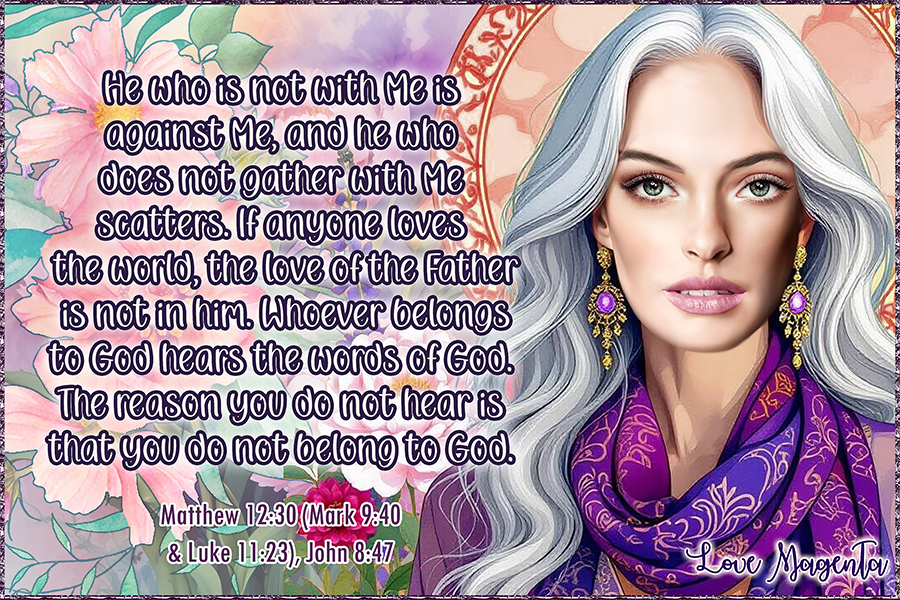
Matthew12-30Mark9-40Luke11-23John8-47.png

Matthew 12 v 30 (Mark 9 v 40 & Luke 11 v 23), John 8 v 47 He who is not with Me is against Me, and he who does not gather with Me scatters. If anyone loves the world, the love of the Father is not in him. Whoever belongs to God hears the words of God. The reason you do not hear is that you do not belong to God.
 
  • Like
Reactions: ThereRoseaLamb
Not sure why you go on and on about those issues with me since I have said no such thing.

Anyways I was checking my panels' start folder to look into finishing ones not done yet, and found this one:

Matthew12-30Mark9-40Luke11-23John8-47.png

Matthew 12 v 30 (Mark 9 v 40 & Luke 11 v 23), John 8 v 47 He who is not with Me is against Me, and he who does not gather with Me scatters. If anyone loves the world, the love of the Father is not in him. Whoever belongs to God hears the words of God. The reason you do not hear is that you do not belong to God.
yeah, this whole exchange began with some cringe Lord making this long pretentious rant about how the Jews allegedly worship Satan and how he is so awesome for knowing, oh. and don't forget his mad shafar skills🤣
 
  • Like
Reactions: ThereRoseaLamb
yeah, this whole exchange began with some cringe Lord making this long pretentious rant about how the Jews allegedly worship Satan and how he is so awesome for knowing, oh. and don't forget his mad shafar skills🤣
Well, he crawled into some rabbit hold he had not known existed, and was shocked at what he discovered,
no doubt as has been said due to his daughter's association with these things, but also his own participation.
 
  • Like
Reactions: ThereRoseaLamb
Well, he crawled into some rabbit hold he had not known existed, and was shocked at what he discovered,
no doubt as has been said due to his daughter's association with these things, but also his own participation.
translation..... he watched a YouTube video
 
Well, he crawled into some rabbit hold he had not known existed, and was shocked at what he discovered,
no doubt as has been said due to his daughter's association with these things, but also his own participation.
This was made worse by a few Bible verses about those who claim to be Jews and are not.

"While rereading Revelation I stumbled over the phrase “synagogue of Satan” in verses 9 of both Chapters 2 and 3. “Those who claim to be Jews but are not,” is all that is really said about them."
 
I feel like I'm in an episode of The Twilight zone and nobody understands what words mean or something.

anyway, that's my whole point. Islam is a 14th century death called bent on world domination and the Jews are our strongest and most dependable Ally against them, regardless of whom they worship. I believe this is the 500th time I have said this throughout this thread.

also, from a theological perspective, blaming the Jews for the crucifixion makes no sense is that was literally the mechanism that the god of the Bible used to fulfill the crucifixion prophecy


yeah, I feel like I'm in an episode of The Twilight zone where no one understands what words mean.
that's literally my point. I believe I have made this point about 652 times on this particular thread.

Islam is a 14th century death cult bent on world domination in the Jews are our strongest and most dependable Ally against them, regardless of whom they worship.


also, blaming the Jews for crucifying Jesus makes zero sense as according to the story, the god of the Bible used the Jewish Pharisees to manipulate Pontius Pilate into crucifying jesus.


so God used them to make it happen but it's still their fault? make it make sense.....
Whoa! Are you blaming God for the crucifixion?
 
The Talmud is a YouTube video?
What Exactly Is the Talmud?

The Talmud is not a single book but a vast library composed of two main parts:

1. The Mishnah (c. 200 CE): This is the core text. After the destruction of the Second Temple in 70 CE, Jewish leaders, led by Rabbi Judah the Prince, compiled the Oral Torah—centuries of laws, debates, and traditions that had been passed down verbally—into a written text. The Mishnah is organized into six "Orders" dealing with everything from agriculture and festivals to marriage and civil law.
2. The Gemara (c. 500 CE): This is the commentary on the Mishnah. Over the next several centuries, generations of rabbis in the major Jewish academies of Babylon and Israel debated, analyzed, and expanded upon the Mishnah. The Gemara records these sprawling, complex, and often unresolved debates. It includes:
· Legal Analysis (Halakha): The rigorous debate to determine practical Jewish law.
· Stories & Parables (Aggadah): Ethical teachings, historical anecdotes, medical advice, folklore, and philosophical explorations. This makes up a huge part of the text.

There are two versions of the Talmud:

· The Jerusalem Talmud: Compiled in the Land of Israel.
· The Babylonian Talmud: Compiled in Babylon. This is the more authoritative and widely studied version.

What Kind of Topics Does It Cover?

The Talmud is encyclopedic. Its six orders cover virtually every aspect of human life:

· Agriculture: Laws about crops, tithes, and the Sabbatical year.
· Festivals: Detailed laws for Shabbat, Passover, Yom Kippur, etc.
· Women & Family Law: Marriage, divorce, contracts.
· Civil & Criminal Law: Damages, courts, torts, and ethics of business.
· Sacred Things: Laws of the Temple, sacrifices, and dietary laws (Kashrut).
· Purity Laws: Ritual purity and impurity.


A Crucial Note on Misinformation

The Talmud is often maliciously misquoted and taken out of context by antisemites to falsely portray Judaism as hateful or supremacist. These claims are:

1. Decontextualized: They pull short phrases from complex legal debates, ignoring the surrounding discussion, the historical context, and the fact that many passages are hypothetical or later overruled.
2. Mistranslated: They often rely on poor or intentionally skewed translations.
3. Ignorant of Jewish Interpretation: Jewish law has a principle that the literal meaning of a biblical verse can be—and often is—overturned by the rabbinic tradition in the Talmud to ensure ethical and moral outcomes.

In essence, the Talmud is the living record of how Judaism grapples with the divine word and applies it to an ever-changing world. It is the foundation for Jewish law, ethics, and thought, and its study remains a central religious obligation for observant Jews.

 
What Exactly Is the Talmud?

The Talmud is not a single book but a vast library composed of two main parts:

1. The Mishnah (c. 200 CE): This is the core text. After the destruction of the Second Temple in 70 CE, Jewish leaders, led by Rabbi Judah the Prince, compiled the Oral Torah—centuries of laws, debates, and traditions that had been passed down verbally—into a written text. The Mishnah is organized into six "Orders" dealing with everything from agriculture and festivals to marriage and civil law.
2. The Gemara (c. 500 CE): This is the commentary on the Mishnah. Over the next several centuries, generations of rabbis in the major Jewish academies of Babylon and Israel debated, analyzed, and expanded upon the Mishnah. The Gemara records these sprawling, complex, and often unresolved debates. It includes:
· Legal Analysis (Halakha): The rigorous debate to determine practical Jewish law.
· Stories & Parables (Aggadah): Ethical teachings, historical anecdotes, medical advice, folklore, and philosophical explorations. This makes up a huge part of the text.

There are two versions of the Talmud:

· The Jerusalem Talmud: Compiled in the Land of Israel.
· The Babylonian Talmud: Compiled in Babylon. This is the more authoritative and widely studied version.

What Kind of Topics Does It Cover?

The Talmud is encyclopedic. Its six orders cover virtually every aspect of human life:

· Agriculture: Laws about crops, tithes, and the Sabbatical year.
· Festivals: Detailed laws for Shabbat, Passover, Yom Kippur, etc.
· Women & Family Law: Marriage, divorce, contracts.
· Civil & Criminal Law: Damages, courts, torts, and ethics of business.
· Sacred Things: Laws of the Temple, sacrifices, and dietary laws (Kashrut).
· Purity Laws: Ritual purity and impurity.


A Crucial Note on Misinformation

The Talmud is often maliciously misquoted and taken out of context by antisemites to falsely portray Judaism as hateful or supremacist. These claims are:

1. Decontextualized: They pull short phrases from complex legal debates, ignoring the surrounding discussion, the historical context, and the fact that many passages are hypothetical or later overruled.
2. Mistranslated: They often rely on poor or intentionally skewed translations.
3. Ignorant of Jewish Interpretation: Jewish law has a principle that the literal meaning of a biblical verse can be—and often is—overturned by the rabbinic tradition in the Talmud to ensure ethical and moral outcomes.

In essence, the Talmud is the living record of how Judaism grapples with the divine word and applies it to an ever-changing world. It is the foundation for Jewish law, ethics, and thought, and its study remains a central religious obligation for observant Jews.
Yep. Much more than a YT video. So is the Kabbalah much more than that.

I looked into this Zohar. It turns out to be one of the main Talmudic texts! All Judaism studies and teaches this. For those of you who don’t know, the Tanakh (Old Testament) is made up of the first five books (Pentateuch) of Torah (Law), then the Nevi'im (Prophets), and also the Ketuvim (Writings — like Psalms and Proverbs). We know those from our own Bible. However there are volumes upon volumes of Talmud, the rabbinic writings, mostly commentary about how to follow the Torah. Christians and Jews generally agree that the Old Testament is holy and comes from God, our Heavenly Father. The Talmud, though, is formalized Antichrist dogma, at one point even suggesting that Jesus is boiling in feces in Hell for falsely claiming to be the messiah. What fellowship can we Christians have with that kind of sentiment?
 
What Exactly Is the Talmud?

The Talmud is not a single book but a vast library composed of two main parts:

1. The Mishnah (c. 200 CE): This is the core text. After the destruction of the Second Temple in 70 CE, Jewish leaders, led by Rabbi Judah the Prince, compiled the Oral Torah—centuries of laws, debates, and traditions that had been passed down verbally—into a written text. The Mishnah is organized into six "Orders" dealing with everything from agriculture and festivals to marriage and civil law.
2. The Gemara (c. 500 CE): This is the commentary on the Mishnah. Over the next several centuries, generations of rabbis in the major Jewish academies of Babylon and Israel debated, analyzed, and expanded upon the Mishnah. The Gemara records these sprawling, complex, and often unresolved debates. It includes:
· Legal Analysis (Halakha): The rigorous debate to determine practical Jewish law.
· Stories & Parables (Aggadah): Ethical teachings, historical anecdotes, medical advice, folklore, and philosophical explorations. This makes up a huge part of the text.

There are two versions of the Talmud:

· The Jerusalem Talmud: Compiled in the Land of Israel.
· The Babylonian Talmud: Compiled in Babylon. This is the more authoritative and widely studied version.

What Kind of Topics Does It Cover?

The Talmud is encyclopedic. Its six orders cover virtually every aspect of human life:

· Agriculture: Laws about crops, tithes, and the Sabbatical year.
· Festivals: Detailed laws for Shabbat, Passover, Yom Kippur, etc.
· Women & Family Law: Marriage, divorce, contracts.
· Civil & Criminal Law: Damages, courts, torts, and ethics of business.
· Sacred Things: Laws of the Temple, sacrifices, and dietary laws (Kashrut).
· Purity Laws: Ritual purity and impurity.


A Crucial Note on Misinformation

The Talmud is often maliciously misquoted and taken out of context by antisemites to falsely portray Judaism as hateful or supremacist. These claims are:

1. Decontextualized: They pull short phrases from complex legal debates, ignoring the surrounding discussion, the historical context, and the fact that many passages are hypothetical or later overruled.
2. Mistranslated: They often rely on poor or intentionally skewed translations.
3. Ignorant of Jewish Interpretation: Jewish law has a principle that the literal meaning of a biblical verse can be—and often is—overturned by the rabbinic tradition in the Talmud to ensure ethical and moral outcomes.

In essence, the Talmud is the living record of how Judaism grapples with the divine word and applies it to an ever-changing world. It is the foundation for Jewish law, ethics, and thought, and its study remains a central religious obligation for observant Jews.
Yes, we know, the Talmud is the traditions of men that were taught as commandments. Jesus warned us to beware of them.
 
I know Dude, have for years on here and I agree with what he said in his post.

Well you should be aware that he blames God for Jesus being crucified.

...also, from a theological perspective, blaming the Jews for the crucifixion makes no sense is that was literally the mechanism that the god of the Bible used to fulfill the crucifixion prophecy...

also, blaming the Jews for crucifying Jesus makes zero sense as according to the story, the god of the Bible used the Jewish Pharisees to manipulate Pontius Pilate into crucifying jesus.


so God used them to make it happen but it's still their fault? make it make sense.....

This is what FreeMason's teach, people are free from sin, it is all God's fault.
 
The actual source is in the Babylonian Talmud, tractate Gittin 56b-57a. This section discusses the destruction of Jerusalem and the fates of various historical and biblical figures in the afterlife. In it, there is a brief mention of a person named "Yeshu" (a common name at the time) being punished in the afterlife.

Here is the critical context that antisemites deliberately omit or distort:

1. It's Not About Jesus of Nazareth: The figure named "Yeshu" in this passage is explicitly identified as a student of a rabbi who lived decades after the historical Jesus. Talmudic scholars agree this is a different person. The Talmud rarely mentions Jesus directly, and when it does, it's sparse and reflects the perspective of a community that did not accept him as the Messiah.
2. The "Punishment" is a Metaphor: The text uses a common rabbinic metaphor for spiritual degradation. The specific phrase is that a person is punished in "boiling excrement." In the context of rabbinic literature, this is a symbolic, not a literal, description of spiritual defilement or shame for one's actions. It is a graphic way of saying someone is in a state of profound spiritual impurity.
3. It's Applied to Many Figures: This metaphor is not unique to "Yeshu." In the very same section, other figures, including Roman emperors and even some biblical figures who opposed the Jewish people, are described with similar post-mortem punishments. It is a literary device within a theological discussion about divine justice.

How This Was Weaponized

During the Middle Ages, Christian apostates who converted to Christianity (like the notorious Nicholas Donin) would take passages like this, willfully identify this "Yeshu" with Jesus, and present them to the Pope and kings as "proof" that Jews were blaspheming against Christ. This was a primary justification for:

· Public burnings of the Talmud (e.g., the Disputation of Paris, 1240).
· Pogroms and massacres of Jewish communities.
· The expulsion of Jews from England, France, and parts of Spain.

In short, this claim is not a modern discovery; it is a weapon of hate that is almost 800 years old
 
Status
Not open for further replies.