
This is quite contradictory. Either God knows, or He does not.Open Theism: God knows everything knowable, but the future is partly open because humans have real freedom.

This is quite contradictory. Either God knows, or He does not.Open Theism: God knows everything knowable, but the future is partly open because humans have real freedom.


There is another view that takes into account that physicists say there are at least 10 dimensions. We perceive only 4 of them; 3 spacial dimensions and time. That leaves 6 dimensions we can't experience, and at least one of these is a second time dimension. So in our time dimension mankind has freewill, and in the other God's sovereignty prevails.
But there are physicists who are Christians who take what they know from science and show how it parallels the Bible and can offer explanations to difficult questions in theology. For example Dr Hugh Ross.Physicists do not speculate about metaphysics as physicists.
A very key element in the proper understanding of biblical predestination is
God's ability to see the future. In other words: biblical predestination isn't an
arbitrary selection process, rather, it's based upon knowing ahead of time
how people are going to react in a given situation

I like Molinism as well. Reason I dont claim to be one is because its never explicitly mentioned in scripture that God "chooses the best possible world" where people freely choose Him when put in certain situations.I came close to seeing Molinism but encountered something I considered problematic after a cursory review. I'm not one looking to necessarily 'belong' in any certain category, so I don't remember what goad? (what does a prick represent, exactly?) I came up on. But the picture comes to mind in this illustration of sovereignty, using ants for example, they can go wherever they like within the confines of the provided ant farm.
But there are physicists who are Christians who take what they know from science and show how it parallels the Bible and can offer explanations to difficult questions in theology. For example Dr Hugh Ross.
Denial of Original Sin: Pelagians reject the idea that Adam's fall caused a corruption of human nature. They believe
that each individual is born with the ability to choose between good and evil, and that sin is a purely voluntary act.
Emphasis on Free Will:
Pelagians emphasize the power of the human will in achieving righteousness and salvation. They
believe that humans can choose to live a virtuous life and avoid sin through their own efforts.
Rejection of Grace:
This view contrasts with the dominant doctrines of grace, which emphasizes that humans need God's grace to overcome sin and achieve salvation. Pelagians minimize the role of grace, suggesting that humans could achieve perfection through their own efforts.
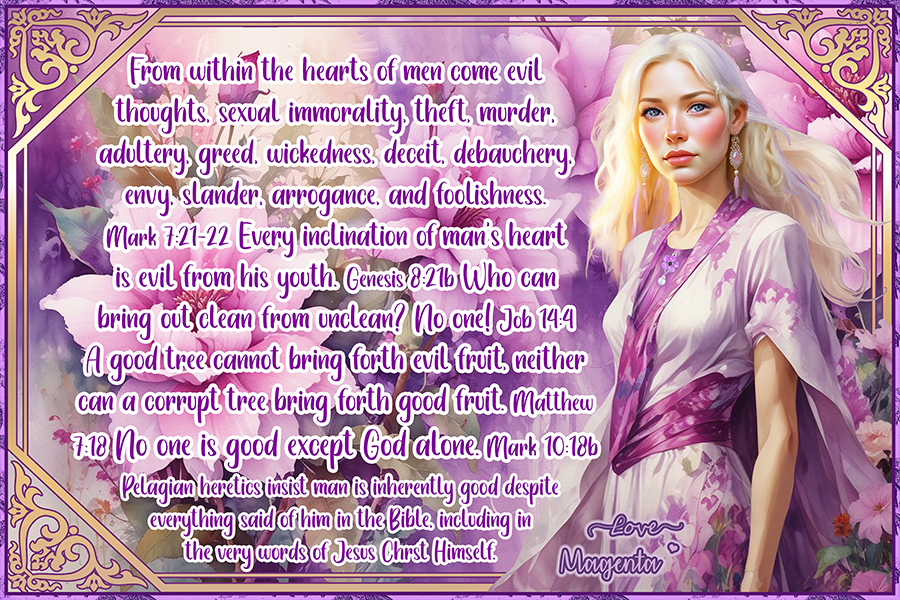
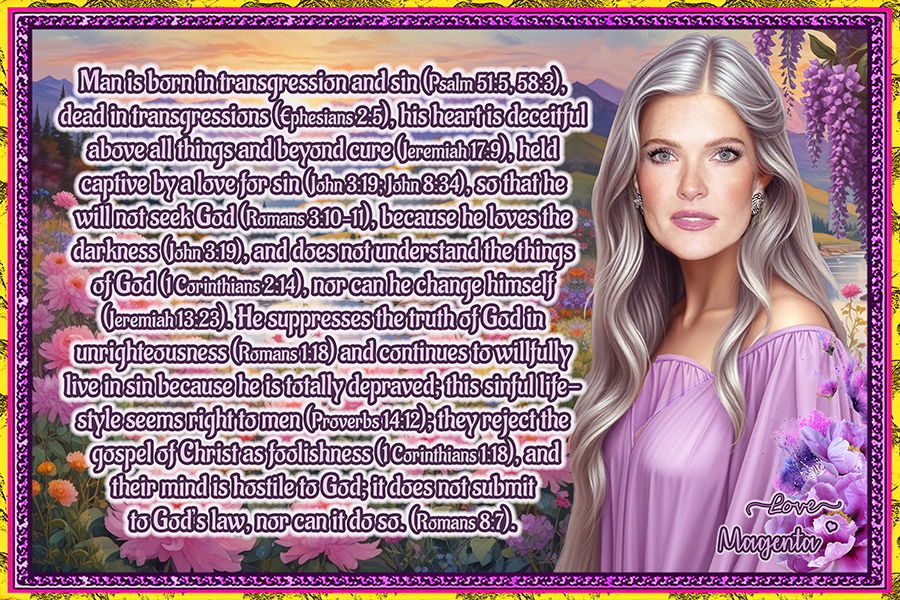
Pelagian heretics insist man is inherently good. From within the hearts of men come evil thoughts, sexual immorality, theft, murder, adultery, greed, wickedness, deceit, debauchery, envy, slander, arrogance, and foolishness. Mark 7:21-22 Every inclination of man's heart is evil from his youth. Genesis 8:21b Who can bring out clean from unclean? No one! Job 14:4 A good tree cannot bring forth evil fruit, neither can a corrupt tree bring forth good fruit. Matthew 7:18

Yes it is speculation. I believe Dr Ross states that he is not saying this is how it happened but that this is one of thousands of ways God could remain sovereign and allow freewill at the same time.Okay, as long as we realize that the "explanations" are speculations.


Strawmen are always easier to face.Never cared for *ism. Someone comes along and tells you why this or that *ism is wrong and blah blah blah. And of course the one telling you which is wrong.. duh believes follow the correct one. Part of that is true.. Its Christ.. that's the one I follow believe in. I am sure some things I believe fall into some *ism. .. time to flip channels

Most regular christians probably dont know what these mean. But for those theology nerds we do.
Basically the simple version is:
- Arminianism: God gives free will; salvation is available to all, but people can reject it.
- Molinism: God knows all possible choices (via "middle knowledge") and sovereignly arranges the world without overriding free will.
- Open Theism: God knows everything knowable, but the future is partly open because humans have real freedom.
- Calvinism: God predestines everything, including who will be saved; human will is subordinate to God's sovereignty.
People might put me in either the Arminian or the Molinism camp, though I claim affinity with neither one of those. I think it best not to claim affinity with any manmade doctrinal position. For example, I would say that I definitely believe in the Trinity, but I will not sign my name to some ecclesiastical written manmade explanation of the Trinity.
Molinism apparently is derived from Augustine, whose doctrine differed from Calvin's by proposing that God knows what souls would choose, so He presents the elect only with the options that lead to faith and salvation. While this view may have technically preserved human free will, it did nothing to preserve God's omnilove and justice/non-favoritism, which is the Achilles heel of both Augustine and Calvin--so I guess they are that part of the body of Christ.

