Who Killed Jesus?

  • Christian Chat is a moderated online Christian community allowing Christians around the world to fellowship with each other in real time chat via webcam, voice, and text, with the Christian Chat app. You can also start or participate in a Bible-based discussion here in the Christian Chat Forums, where members can also share with each other their own videos, pictures, or favorite Christian music.

    If you are a Christian and need encouragement and fellowship, we're here for you! If you are not a Christian but interested in knowing more about Jesus our Lord, you're also welcome! Want to know what the Bible says, and how you can apply it to your life? Join us!

    To make new Christian friends now around the world, click here to join Christian Chat.

Who Killed Jesus


  • Total voters
    34
John 10:17-18 "The reason the Father loves Me is that I lay down My life in order to take it up again. No one takes it from Me, but I lay it down of My own accord. I have authority to lay it down and authority to take it up again. This charge I have received from My Father.”

By this He shows His divine nature: He did not have a need unless He decided He had a need. Rejoice! that the Living God decided to be known as love! Because of this, we are invited into the Beloved as a member of the House of God. Such an amazing gospel!
 
we thought He was plagued - -

John 10:20​
and many of them said,
He hath a devil, and is mad; why hear ye Him?
but were we correct?

can God be destroyed by pneumonia?
germs > God, you think that makes sense?
Yes. I think the Person of the Word became human in every way like us (Hebrews). Once the Holy Spirit withdrew the hedge about Jesus (Job) in the garden of Gethsemane and allowed Jesus to be arrested, he was susceptible to diseases.
 
"When Jesus had received the sour wine, he said, 'It is finished,' and he bowed his head and gave up his spirit"

It's really axiomatic: No one could kill Jesus unless He decided He could be killed.

100%
 
Yes. I think the Person of the Word became human in every way like us (Hebrews). Once the Holy Spirit withdrew the hedge about Jesus (Job) in the garden of Gethsemane and allowed Jesus to be arrested, he was susceptible to diseases.

in Gethsemane He spoke His name and Satan himself was thrown to the ground by the power of His word.

but you think He was helpless?

legions of soldiers could not arrest Him if He Himself did not will it even that very night. He humbled Himself and went willingly. He allowed Himself to be crucified - even telling Pilate that he had no power over Him unless He Himself gave Pilate that power.
 
  • Like
Reactions: Aaron56
Are you seeking the truth, or are you just trying to make a name for yourself?

Actually I would LOVE for someone to prove I was wrong with what I am seeing. The problem is NT seminary profs, those people who teach the New Testament to many pastors are not doing that. They either claim that I am wrong because I differ with the traditional interpretations or they say that I have wonderful insights.

Now if you have the courage to try to be the one to find an error, please let me know. But I will not listen to anyone saying that I must be wrong because I differ with tradition, I will if someone can point out an error in my logic, but such would be different. A simple way to do that would be to establish that the "clearly irrelevant" history I am citing is either wrong or actually irrelevant, but bear in mind, multiple scholars have not been able to do so. History I cite includes four wars Rome was involved in between 88 and 53 BCE. Rome won two of the first three, the third (second chronologically) was basically a draw when Rome refuted their general that had started it, but badly lost the 4th, and suffered problems for 16 years after it. The next was in 35-7 CE which amounted to a draw, same opponent as war 4 (Rome did what it wanted at first, the opponent came back and restored things to where they were before Rome intervened but then stopped). Then came the one from 54-64 CE in which the active conflicted ended in 63 and the peace treaty was formalized roughly 3 weeks before the "Great Fire" in Rome and Nero's subsequent treatment of Christians as if they were traitors to Rome, the same punishments suffered by both Jews and Christians in the 1st Jewish War, but punishments that were not used in Boudicca's rebellion in the early 60's CE, just before using them on Christians.

Now if you already know about all the wars I reference, you are ahead of many biblical scholars and so you have a leg up.
 
  • Like
Reactions: Suze
in Gethsemane He spoke His name and Satan himself was thrown to the ground by the power of His word.

but you think He was helpless?

legions of soldiers could not arrest Him if He Himself did not will it even that very night. He humbled Himself and went willingly. He allowed Himself to be crucified - even telling Pilate that he had no power over Him unless He Himself gave Pilate that power.

Or, Our lord had become human in every way like us, and dependent on faith and the Holy Spirit to empower Him throughout life, like we are, and was protected by angels from human and demonic attack, as we sometimes are, and after His angelic body guard had pushed back the mob, He consented to being arrested and the Father stood down the angels. I agree he went willingly. But that does not mean that He could personally resist successfully by His own power, if unwilling. That does not logically follow.

Our Lord did did not tell Pilate that He Himself had given Pilate the power Pilate had.
 
"When Jesus had received the sour wine, he said, 'It is finished,' and he bowed his head and gave up his spirit"

It's really axiomatic: No one could kill Jesus unless He decided He could be killed.

What do you mean by axiomatic? What is axiomatic? How was Jesus' giving up His spirit different from Stephen giving up his spirit?'

Act 7:59
And they stoned Stephen, calling upon God, and saying, Lord Jesus, receive my spirit.

Mat 27:50
Jesus, when he had cried again with a loud voice, yielded up the ghost.
Mar 15:37
And Jesus cried with a loud voice, and gave up the ghost.
Luk 23:46
And when Jesus had cried with a loud voice, he said, Father, into thy hands I commend my spirit: and having said thus, he gave up the ghost.
Jhn 19:30
When Jesus therefore had received the vinegar, he said, It is finished: and he bowed his head, and gave up the ghost.
 
Our Lord did did not tell Pilate that He Himself had given Pilate the power Pilate had.

what does it mean that He is King and that His kingdom is not of this world?

what is He saying?

that He is King of all Kings, including Pilate.
 
what does it mean that He is King and that His kingdom is not of this world?

what is He saying?

that He is King of all Kings, including Pilate.

Jesus was the king of the Jews, but the kingdom He was ruling over was not an earthly kingdom running on worldly principles of enforced allegiance by might. It was running on heavenly principles of service and love attracting allegiance. Where did Jesus tell Pilate that He is the one who gave Pilate his power over Jesus?

What He said was -
Jhn 19:11
Jesus answered, Thou couldest have no power at all against me, except it were given thee from above: therefore he that delivered me unto thee hath the greater sin.
 
What He said was -
Jhn 19:11
Jesus answered, Thou couldest have no power at all against me, except it were given thee from above: therefore he that delivered me unto thee hath the greater sin.

John 8:23-24​
And He said to them,
"You are from beneath; I am from above. You are of this world; I am not of this world.
Therefore I said to you that you will die in your sins; for if you do not believe that I AM you will die in your sins."
 
Where did Jesus tell Pilate that He is the one who gave Pilate his power over Jesus?

What He said was -
Jhn 19:11
Jesus answered, Thou couldest have no power at all against me, except it were given thee from above: therefore he that delivered me unto thee hath the greater sin.

if His kingdom is not of this world where is it of, except above?

hell, below?

Jesus told Pilate that He is the LORD of Heaven and that Pilate would not have any power unless heaven had granted it to him.
 
What do you mean by axiomatic? What is axiomatic? How was Jesus' giving up His spirit different from Stephen giving up his spirit?'

Act 7:59
And they stoned Stephen, calling upon God, and saying, Lord Jesus, receive my spirit.

Mat 27:50
Jesus, when he had cried again with a loud voice, yielded up the ghost.
Mar 15:37
And Jesus cried with a loud voice, and gave up the ghost.
Luk 23:46
And when Jesus had cried with a loud voice, he said, Father, into thy hands I commend my spirit: and having said thus, he gave up the ghost.
Jhn 19:30
When Jesus therefore had received the vinegar, he said, It is finished: and he bowed his head, and gave up the ghost.

Axiomatic means the truth is self-evident.

Stephen petitioned the Lord in prayer to receive his spirit.
Jesus "gave up Him spirit" by His own volition.
Also, it was not in Stephen's authority to call down legions of angels to protect himself from harm.
 
  • Like
Reactions: posthuman
Axiomatic means the truth is self-evident.

Stephen petitioned the Lord in prayer to receive his spirit.
Jesus "gave up Him spirit" by His own volition.
Also, it was not in Stephen's authority to call down legions of angels to protect himself from harm.

But it is not self-evident. Nor is it explicitly stated in scripture. You are presupposing some things that are not in scripture and are not axiomatic, and are superimposing those onto scripture. There is no intrinsic difference between Stephen praying,
"Lord Jesus, receive/take with the hand (dexai) my spirit." and Jesus praying "
Luk 23:46
"... Father, into thy hands I commend/entrust (parathEsomai) my spirit."
 
Jesus answered, “My kingdom is not of this world; if it were, My servants would
fight to prevent My arrest by the Jews. But now My kingdom is not of this realm.”


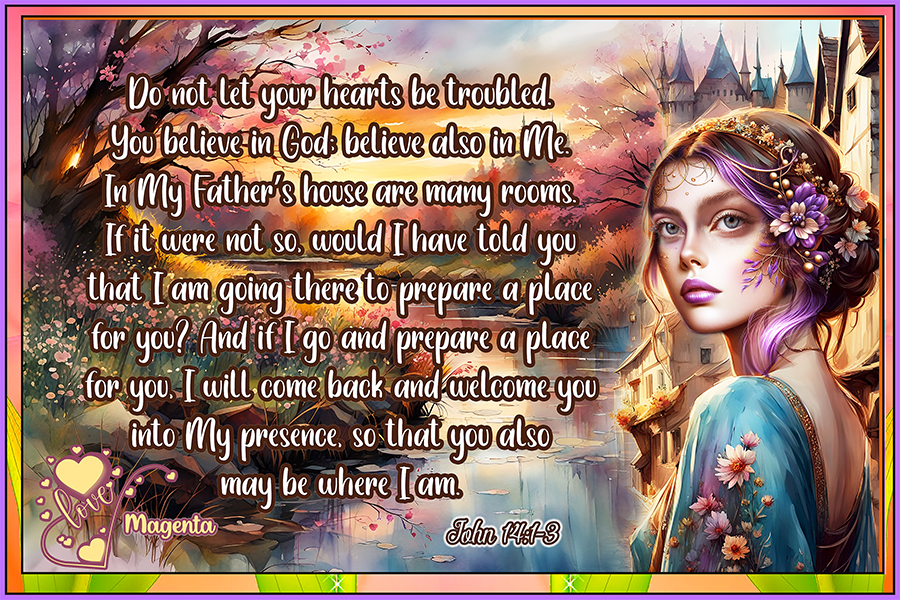
John14-1-3s.png

John 14:1-3 Do not let your hearts be troubled. You believe in God; believe also in Me. In My Father’s house are many rooms. If it were not so, would I have told you that I am going there to prepare a place for you? And if I go and prepare a place for you, I will come back and welcome you into My presence, so that you also may be where I am.
 
But it is not self-evident. Nor is it explicitly stated in scripture. You are presupposing some things that are not in scripture and are not axiomatic, and are superimposing those onto scripture. There is no intrinsic difference between Stephen praying,
"Lord Jesus, receive/take with the hand (dexai) my spirit." and Jesus praying "
Luk 23:46
"... Father, into thy hands I commend/entrust (parathEsomai) my spirit."

You must have voted for something other than "Jesus Died Willingly". #shrug

You have to keep going with the passages:
"..and gave up his spirit."
"And Jesus cried out again with a loud voice, and yielded up His spirit."
Etc.

This was by His own volition.
 
John 8:23-24​
And He said to them,
"You are from beneath; I am from above. You are of this world; I am not of this world.
Therefore I said to you that you will die in your sins; for if you do not believe that I AM you will die in your sins."
He was from above, but at the time He was not above, He was below, as a human being, because He came from above to below to take on the nature of humanity. The rest of the Godhead were above. And arguably, they were giving Pilate his authority over Jesus. Your case is not as axiomatic or water tight as you like to imagine.
 
.
You must have voted for something other than "Jesus Died Willingly". #shrug

You have to keep going with the passages:
"..and gave up his spirit."
"And Jesus cried out again with a loud voice, and yielded up His spirit."
Etc.

This was by His own volition.
I voted for them all (except "God killed His Son") and added some others.
 
You must have voted for something other than "Jesus Died Willingly". #shrug

You have to keep going with the passages:
"..and gave up his spirit."
"And Jesus cried out again with a loud voice, and yielded up His spirit."
Etc.

This was by His own volition.
Stephen also gave up his spirit to God willingly.