Can We Really Exercise Free Will?

  • Christian Chat is a moderated online Christian community allowing Christians around the world to fellowship with each other in real time chat via webcam, voice, and text, with the Christian Chat app. You can also start or participate in a Bible-based discussion here in the Christian Chat Forums, where members can also share with each other their own videos, pictures, or favorite Christian music.

    If you are a Christian and need encouragement and fellowship, we're here for you! If you are not a Christian but interested in knowing more about Jesus our Lord, you're also welcome! Want to know what the Bible says, and how you can apply it to your life? Join us!

    To make new Christian friends now around the world, click here to join Christian Chat.
Grace doesn't simply subdue depravity, it changes the heart. This isn't merely an "earthly issue", it is the essence of the restoration of an individual to a prefallen estate. It is actually an improved restorative state as the individual now is a partaker of the divine nature.

Philippians3-3-Colossians2-11-Romans2-29b.png

Philippians 3 verse 3; Colossians 2 verse 11; Romans 2 verse 29b ~ For it is we who are the circumcision, we who worship by the Spirit of God, who glory in Christ Jesus, and who put no confidence in the flesh. You were also circumcised, in the putting off of your sinful nature, with the circumcision performed by Christ and not by human hands. Circumcision is a matter of the heart, by the Spirit, not by the written code.
 
  • Like
Reactions: Cameron143
- a topic separate from 1 above - that belief is from salvation; salvation isn't from belief.
@rogerg 16:31~~you are saved and in the future you will believe..........

Most will have a hard time with that one. And simple language refutes this theory. The Greek totally refutes it.
 
What can I tell you?

Lets try this....

Hello wonderful John!
Have I told you, I love you?
Even though you present a distorted view of God making him to be evil, I do!

And, I forgive you, John... for what God will never forgive unless you repent.

Better now?
no ... what would be better ...

verses not ripped from the context within which the Author of Scripture has placed them ...


quite conflating verses from one context with verses from completely different contexts, which changes what the Author of Scripture wrote concerning the verses ...

when reading the parable Jesus told concerning the good samaritan ... don't change the focus from who is the good neighbor to the half-dead guy in an effort to support what Jesus was not focussing on ... thereby not learning the lesson of what Jesus was focussing on ... with is to be a good neighbor (bringing this example up because it's a recent example of something that should have been laid to rest over a month ago when we hashed it out) ...

when it finally does get through and you now know what Scripture tells you, don't re-tie the knot several weeks later in a never-ending circular argument ... learn the lesson ... be thankful God has revealed it to you ... we're talking about His Word, which He has magnified above His name ... treat His Word with the respect His Word deserves ...

that's enough for now ... I could go on ...

.
 
@rogerg 16:31~~you are saved and in the future you will believe..........

Most will have a hard time with that one. And simple language refutes this theory. The Greek totally refutes it.

According to you perhaps because your fallacy is that man is able to save himself. But only Christ is the Savior, man is not.
 
@rogerg 16:31~~you are saved and in the future you will believe..........

Most will have a hard time with that one. And simple language refutes this theory. The Greek totally refutes it.
smh ... he's correcting God's grammar ...


I am saying two different things: 1) regardless of when read, the two tenses should match if one is an immediate cause of the other and, 2) as a general doctrine - a topic separate from 1 above - that belief is from salvation; salvation isn't from belief.

worldly example to try to explain why the two tenses do not match ...

son: Dad, when can I drive the car?

dad: Son, when you get your license you shall be able to drive the car.


Acts 16:

jailer: What must I do to be saved?

Paul and Silas: Believe on the name of the Lord Jesus Christ and you shall be saved.


Acts 16:

30 And brought them out, and said, Sirs, what must I do to be saved?

31 And they said, Believe on the Lord Jesus Christ, and thou shalt be saved, and thy house.

.
 
Grace doesn't simply subdue depravity, it changes the heart. This isn't merely an "earthly issue", it is the essence of the restoration of an individual to a prefallen estate. It is actually an improved restorative state as the individual now is a partaker of the divine nature.
What do we know of the pre-fallen state? Some say things like Adam was perfect, when he obviously
was not, or he would not have sinned. We are perfected in Christ. Adam had access to the Tree of Life
but did not eat of it, and after sinning, was ousted from the garden to prevent him eating from it. One
other thing we know for certain is that he was of the natural world, and God knew what he would do.


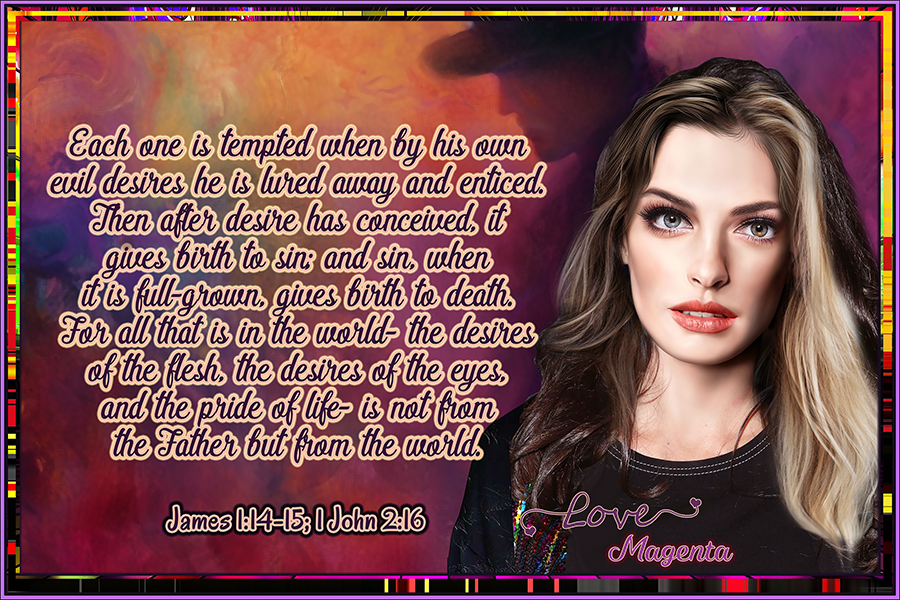
James1-14-15plus1-John2-16s.png

James 1 v 14-15; 1 John 2 v 16 Each one is tempted when by his own evil desires he is lured away and enticed. Then after desire has conceived, it gives birth to sin; and sin, when it is full-grown, gives birth to death. For all that is in the world- the desires of the flesh, the desires of the eyes, and the pride of life- is not from the Father but from the world. .:)
 
  • Like
Reactions: Cameron143
No. The spiritually dead - and everyone is spiritually dead before becoming saved/born again- cannot believe the truth. True belief accompanies spiritual life not spiritual death, but life is only given by God, not by man. Observe in the verses following, those in them played no part whatsoever in the receiving of spiritual life: they were dead in sin, but God, by His grace and mercy alone, gave them spiritual life, period. They contributed nothing whatsoever to it - solely being recipients. The spiritually dead, being spiritually dead - just as physically dead are physically dead- cannot give anything to themselves - therefore, the dead are completely at God's mercy for life, utterly unable to give it to themselves. And as dead, neither can they give to themselves true faith nor belief.
But He does give them freely to those chosen from before the foundation of the world.

[Eph 2:1 KJV] 1 And you[hath he quickened], who were dead in trespasses and sins;
[Eph 2:5 KJV] 5 Even when we were dead in sins, hath quickened us together with Christ, (by grace ye are saved;
[Col 2:13 KJV] 13 And you, being dead in your sins and the uncircumcision of your flesh, hath he quickened together with[G4862] him, having forgiven you all trespasses

Interesting how you've supplied the narrative instruction of your choosing and then posit that those verses mean what you say. Yet not one of those verses say an unbeliever cannot become convinced of and believe the Gospel.
 
Interesting how you've supplied the narrative instruction of your choosing and then posit that those verses mean what you say. Yet not one of those verses say an unbeliever cannot become convinced of and believe the Gospel.
Not one verse has EVER been supplied articulating what you believe regarding an unregenerated person
choosing to come into the light and believe what he hears as foolishness while a lover of darkness
enslaved to sin, opposed to the spiritual things of God, which he can neither receive nor comprehend.
Flesh serves the law of sin and brings forth fruit unto death is what the Bible teaches.
 
Acts16:31:

You (singular) believe upon the Lord Jesus Christ
  • Aorist Active Imperative 2nd Person Singular: The jailer is being commanded to believe upon the Lord Jesus Christ.
    • What some don't want to accept here, is that the imperative/command is made to the will of the one commanded. The jailer is being commanded to choose to believe if he wants the result.
    • The Aorist command is not really concerned with when (time) but with how (aspect) the action is viewed. It's essentially viewed as a unit and something to be done decisively, completely, once-for-all.
And
  • Connects the two clauses, so believe is connected to saved
You (singular) will be saved:
  • Future Passive Indicative 2nd Person Singular: The jailer will be saved assuming he chooses to obey the command to believe upon the Lord Jesus Christ.
  • The Future here can also be expressing certainty.
  • The Passive Voice says the saving will be done to the jailer.
    • So, we who read the language know we don't save ourselves.
The Greek has a couple different things to consider:
  • There is a logical order, so believe leads to salvation (believe > saved)
    • This cannot be reversed to say saved > believe.
  • There is a temporal order, so belief precedes salvation
    • This cannot be reversed to say saved > believe.
    • In regard to the temporal order:
      • The timing can be saved contemporaneous with or after believe.
        • Being that the aorist command is being issued in urgency and completeness, IMO it's best to see the logical order of believe > saved and the temporal concept based upon other Scriptures being contemporaneous or immediate.
        • Though salvation is a process with an entrance and a completion (actually more than one completion) I don't see the process in view. The jailer is facing death for the loss of prisoners.
[Choose to] believe upon the Lord Jesus Christ and you will be immediately saved when you believe.

@cv5 @reneweddaybyday @Cameron143 @HeIsHere @Genez
 
@rogerg sorry I missed copying you on post #8.991 even though I'm pretty certain you can't agree with it. I tried to cc those I'd seen discussing the language in or related to Acts16:31.

@Kroogz sorry I missed you also.
 
  • Like
Reactions: Kroogz
For Mag to make a picture of:

"Jerusalem!... How I have longed to gather your children together, as a hen gathers her chicks under her wings,
but you were not willing. (Matthew 23:37)
 
  • Like
Reactions: cv5
Free will is having the power to choose between two things. Loving God or not, going to church or not, being Christian or Muslim, Marrying a fat man or a thin man. going to Heaven, or to Hell, doing good or bad. All through life we are going to be making choices as you have said but weigh the choice you are going to make on the scripture. Deuteronomy 30:19, states: "I call heaven and earth to witness against you today, that I have set before you life and death, blessing and curse. Therefore choose life, that you and your offspring may live."
God has given us the freedom to choose but He has warned us that one way leads to life and the other to death.

"Free will is having the power to choose between two things."

As i've said many times in comments on this post, that's choice. I have also repeatedly pointed out that most people don't understand the difference between choice and free will, which is the ability to enact our will and choices unilaterally.

The only being who can do that is the Big Guy upstairs. We can ourselves occasionally but usually need the cooperation of others, because our choices often impact others and interfere with their free will. It's logic 101 but i do think your comment was in good faith, i have explained my reasoning many times but there are quite a few spiteful, irrational fools, who troll, create arguments etc, to ruin worthwhile discussion.
 
There you go again. I don't follow a process; I follow Christ. You are just another in a long line of dishonest people here on this site.

Perhaps system is a better word (not sure why you pretend otherwise, since your posts make it clear you adhere to a modernized version of "tulip') nowhere in my post did I state they are mutually exclusive btw, that is simply your eisegesis.
 
"Free will is having the power to choose between two things."

As i've said many times in comments on this post, that's choice. I have also repeatedly pointed out that most people don't understand the difference between choice and free will, which is the ability to enact our will and choices unilaterally.

The only being who can do that is the Big Guy upstairs. We can ourselves occasionally but usually need the cooperation of others, because our choices often impact others and interfere with their free will. It's logic 101 but i do think your comment was in good faith, i have explained my reasoning many times but there are quite a few spiteful, irrational fools, who troll, create arguments etc, to ruin worthwhile discussion.

Free will is not about the ability to affect the outcome of one's choices.
 
Acts16:31:

You (singular) believe upon the Lord Jesus Christ
  • Aorist Active Imperative 2nd Person Singular: The jailer is being commanded to believe upon the Lord Jesus Christ.
    • What some don't want to accept here, is that the imperative/command is made to the will of the one commanded. The jailer is being commanded to choose to believe if he wants the result.
    • The Aorist command is not really concerned with when (time) but with how (aspect) the action is viewed. It's essentially viewed as a unit and something to be done decisively, completely, once-for-all.
And
  • Connects the two clauses, so believe is connected to saved
You (singular) will be saved:
  • Future Passive Indicative 2nd Person Singular: The jailer will be saved assuming he chooses to obey the command to believe upon the Lord Jesus Christ.
  • The Future here can also be expressing certainty.
  • The Passive Voice says the saving will be done to the jailer.
    • So, we who read the language know we don't save ourselves.
The Greek has a couple different things to consider:
  • There is a logical order, so believe leads to salvation (believe > saved)
    • This cannot be reversed to say saved > believe.
  • There is a temporal order, so belief precedes salvation
    • This cannot be reversed to say saved > believe.
    • In regard to the temporal order:
      • The timing can be saved contemporaneous with or after believe.
        • Being that the aorist command is being issued in urgency and completeness, IMO it's best to see the logical order of believe > saved and the temporal concept based upon other Scriptures being contemporaneous or immediate.
        • Though salvation is a process with an entrance and a completion (actually more than one completion) I don't see the process in view. The jailer is facing death for the loss of prisoners.
[Choose to] believe upon the Lord Jesus Christ and you will be immediately saved when you believe.

@cv5 @reneweddaybyday @Cameron143 @HeIsHere @Genez
Yes sir. Totally agree with your astute analysis. Beautiful lexicon work as usual.

I have a humdinger prepared for Acts 13:48 as well. Stay tuned will post later today. And yes, a good lexicon and careful scholarship are key to revealing the truth of the matter. And it certainly is NOT super-determinism.
 
  • Like
Reactions: Kroogz and HeIsHere