Can We Really Exercise Free Will?

  • Christian Chat is a moderated online Christian community allowing Christians around the world to fellowship with each other in real time chat via webcam, voice, and text, with the Christian Chat app. You can also start or participate in a Bible-based discussion here in the Christian Chat Forums, where members can also share with each other their own videos, pictures, or favorite Christian music.

    If you are a Christian and need encouragement and fellowship, we're here for you! If you are not a Christian but interested in knowing more about Jesus our Lord, you're also welcome! Want to know what the Bible says, and how you can apply it to your life? Join us!

    To make new Christian friends now around the world, click here to join Christian Chat.
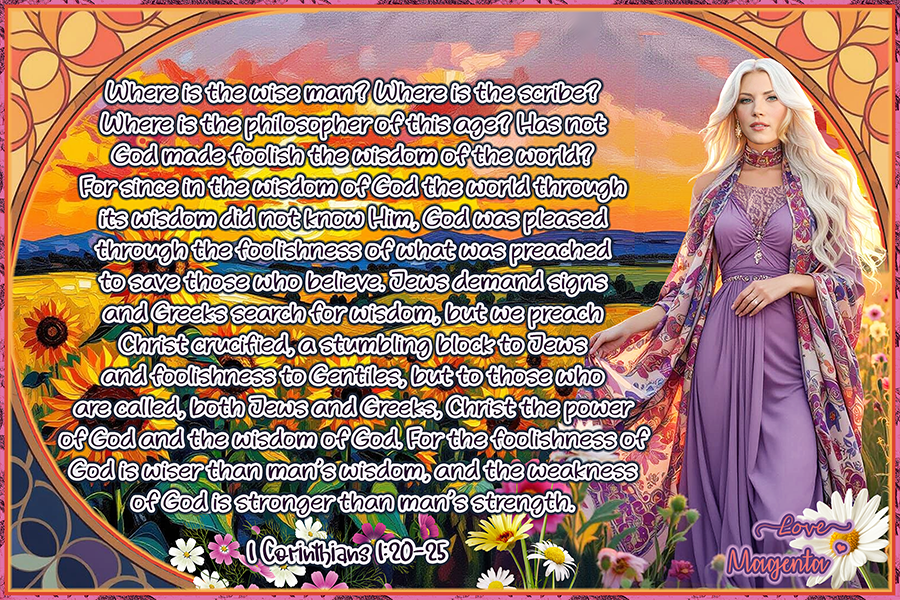
1-Corinthians1-20-25.png

1 Corinthians 1 v 20-25 Where is the wise man? Where is the scribe? Where is the philosopher of this age? Has not God made foolish the wisdom of the world? For since in the wisdom of God the world through its wisdom did not know Him, God was pleased through the foolishness of what was preached to save those who believe. Jews demand signs and Greeks search for wisdom, but we preach Christ crucified, a stumbling block to Jews and foolishness to Gentiles, but to those who are called, both Jews and Greeks, Christ the power of God and the wisdom of God. For the foolishness of God is wiser than man’s wisdom, and the weakness of God is stronger than man’s strength.
 
Mans wisdom says Christ did not die for all.

1 John 2:2
and He Himself is the propitiation for our sins; and not for ours only, but also for the sins of the whole world.
 
  • Like
Reactions: Blue155
“This expression [of our Lord], “How often would I have gathered thy children together, and thou wouldest not,” set forth the ancient law of human liberty, because God made man a free [agent] from the beginning, possessing his own power, even as he does his own soul, to obey the behests (ad utendum sententia) of God voluntarily, and not by compulsion of God. For there is no coercion with God, but a good will [towards us] is present with Him continually. And therefore does He give good counsel to all. And in man, as well as in angels, He has placed the power of choice (for angels are rational beings), so that those who had yielded obedience might justly possess what is good, given indeed by God, but preserved by themselves” — Irenaeus

“If any one is truly religious, he is a man of God; but if he is irreligious, he is a man of the devil, made such, not by nature, but by his own choice.” — Ignatius of Antioch (c. 35AD – 107AD)

“There is, therefore, nothing to hinder you from changing your evil manner to life, because you are a free man.” — Melito of Sardis, c. 170AD

“And do not wonder that a man may become an imitator of God. He can, if he is willing.” — Mathetes (2nd century)

“It is therefore in the power of every one, since man has been made possessed of free-will, whether he shall hear us to life, or the demons to destruction.” — Shepherd of Hermas (c. 130–140 AD)

“Just as with men, who have freedom of choice as to both virtue and vice, so it is among the angels…Some free agents, you will observe, such as they were created by God, continued in those things for which God had made and over which he had ordained them; but some outraged both the constitution of their nature and the government entrusted to them.” — Athenagoras of Athens (c. 133–190 AD)

If, on the other hand, he would turn to the things of death, disobeying God, he would himself be the cause of death to himself. For God made man free, and with power of himself.” — Theophilus of Antioch (died c. 185 AD)

We…have believed and are saved by voluntary choice.” — Clement of Alexandria (c. 150–215 AD)

“I find, then, that man was constituted free by God. He was master of his own will and power… Man is free, with a will either for obedience or resistance.” — Tertullian (c. 160–225 AD)

“This is also clearly defined in the teaching of the church, that every rational soul has free will and volition….we are not forced by any necessity to act either rightly or wrongly.” — Origen of Alexandria (c. 185–254 AD)

“The liberty of believing or not believing is placed in free choice. In Deuteronomy, it says, ‘Look! I have set before your face life and death, good and evil. Choose for yourself life, that you may live.’” — Cyprian of Carthage (c. 200–258 AD)

When he had given man all things for his service, he willed that man alone should be free. And lest an unbounded freedom would lead man into peril, He had laid down a command.” — Novatian (c. 200–258 AD)

“All the creatures that God made, He made very good. And He gave to every individual the sense of free will, by which standard He also instituted the law of judgment…. And certainly whoever will, may keep the commandments.” — Archelaus (3rd century)

“Those [pagans] who decide that man does not have free will, but say that he is governed by the unavoidable necessities of fate, are guilty of impiety toward God Himself, making Him out to be the cause and author of human evils.” — Methodius (c. 260–312 AD)

“Every rational soul has naturally a good free-will, formed for the choice of what is good. But when a man acts wrongly, nature is not to be blamed; for what is wrong, takes place not according to nature, but contrary to nature.” — Eusebius of Caesarea (c. 263–339 AD)

“Does He not free all alike who invites all alike? Or does He thrust back or repel any one from the kindness of the supreme, who gives to all alike the power of coming to Him.” — Arnobius (c. 297–303 AD)

Brian Wagner: “There seems to have been no exceptions among early Christian writers to the orthodox teaching that man has been granted by God a free will to choose his destiny, and that salvation is available to all. The opposing view, that man is controlled by fate, could only be found in the Greek philosophical schools, Gnosticism, and Eastern mysticism during the first 300 years of Christianity. It is no wonder that the man who introduced Greek fatalism into Christianity should come from a Gnostic and Neo-Platonic background. Augustine’s theory differed from the Greek philosophers mainly by naming the CAUSE of fate — God’s mysterious will which must not be questioned, and cannot be understood by mortals. The impact of Augustine’s teaching probably would not have been nearly so great if Pelagius had not gone to the opposite extreme in renouncing Augustine.”

“You [Augustine] make God the author of our sins by asserting that He predestines some to salvation and others to damnation, as if human will has no role in its own choices. This is nothing but Manichaean determinism dressed in Christian garb.” — Julian of Eclanum (421AD)

“God’s grace indeed cooperates with our will, but it does not compel it. For if all is determined by divine predestination, why do we exhort men to strive for virtue, or why does Scripture command us to choose life? The human will must begin, and God completes.” — John Cassian (c. 425–429 AD)

“God invites all to salvation, and His grace is offered universally. The human will… retains the power to accept or reject” — De Gratia (c. 470–475 AD)

“The fact that they all agreed seems very credible, and their consensus could not be more clear: mankind has always had the free will to choose God…”
 
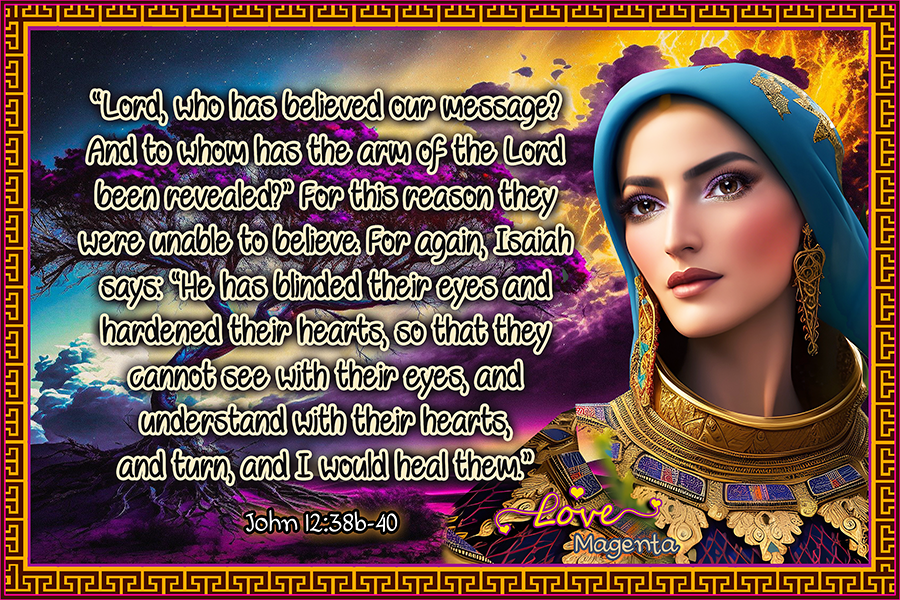
John12-38b-40s.png

John 12 v 38b-40 “Lord, who has believed our message? And to whom has the arm of the Lord
been revealed?” For this reason they were unable to believe. For again, Isaiah says: “He has blinded their eyes and hardened their hearts, so that they cannot see with their eyes, and understand with their hearts, and turn, and I would heal them.”
 
2-Corinthians-4-4.png

2 Corinthians 4 v 4 The god of this age has blinded the minds of unbelievers, so they cannot see the light of the gospel of the glory of Christ, who is the image of God.
 
  • Like
Reactions: Jordon
In Philippians 4:3 Paul mentions “my fellowlabourers” “in the gospel,” and he names “Clement,” whose name he said was written “in the book of life…” History knows this man, who was Paul’s companion and who was endorsed by the Scriptures themselves, as Clement of Rome. Clement said, “It is therefore in the power of every one, since man has been made possessed of free-will, whether he shall hear us to life, or the demons to destruction.”[7] Clement said that “free-will” was given because “he who is good by his own choice is really good; but he who is made good by another under necessity is not really good, because he is not what he is by his own choice…”[8] Clement also said that the reason a sinner was susceptible to God’s punishment for their disobedience was because a sinner has the ability to obey God. He said, “For no other reason does God punish the sinner either in the present or in the future world, except because He knows that the sinner was able to conquer but neglected to gain the victory.”[9]

In the days of the Early Church, the debate between the freedom of man’s will vs. the total depravity of man’s nature was one of the major divisions between the early Christians and the Gnostic sects. Beausobre said, “…those ancient writers, in general, say that Manichaeans denied free-will. The reason is, that the Fathers believed, and maintained, against the Manichaeans, that whatever state man is in he has the command over his own actions, and has equally power to do good or evil.”[2] W. F. Hook said, “The Manichaeans so denied free will, as to hold a fatal necessity of sinning.”[3] Lyman Beecher said, “…the free will and natural ability of man were held by the whole church… natural inability was to that of the pagan philosophers, the Gnostic’s, and the Manichaeans.”

There were many different Gnostic groups in the days of early Christianity, who also denied the freedom of man’s will, such as Marcionism started by Marcion. But one of the greatest competitors and threats to the Early Church was the Manichaeans started by Manes, a Persian philosopher, also known as Mani.

The Early Church debated the founder of this Gnostic group in the Acta Archelai,” also known as “The Disputation with Manes.” Archelaus, a bishop in the Early Church, represented their doctrine that God does not make us with ruined natures but has given us free will. Mani took the Gnostic position that man’s nature was totally depraved and corrupted and that man did not have a free will.

The judges of the debate ruled in favor of Archelaeus and ruled against Mani, stating that man does in fact have free will as opposed to a depraved nature. The belief of early Christianity is stated in the debate in this way, “All the creatures that God made, He made very good. And He gave to every individual the sense of free will, by which standard He also instituted the law of judgment… our will is constituted to choose either to sin or not to sin… And certainly whoever will, may keep the commandments. Whoever despises them and turns aside to what is contrary to them, shall yet without doubt have to face this law of judgment… There can be no doubt that every individual, in using his own proper power of will, may shape his course in whatever direction he pleases.”[5]
 
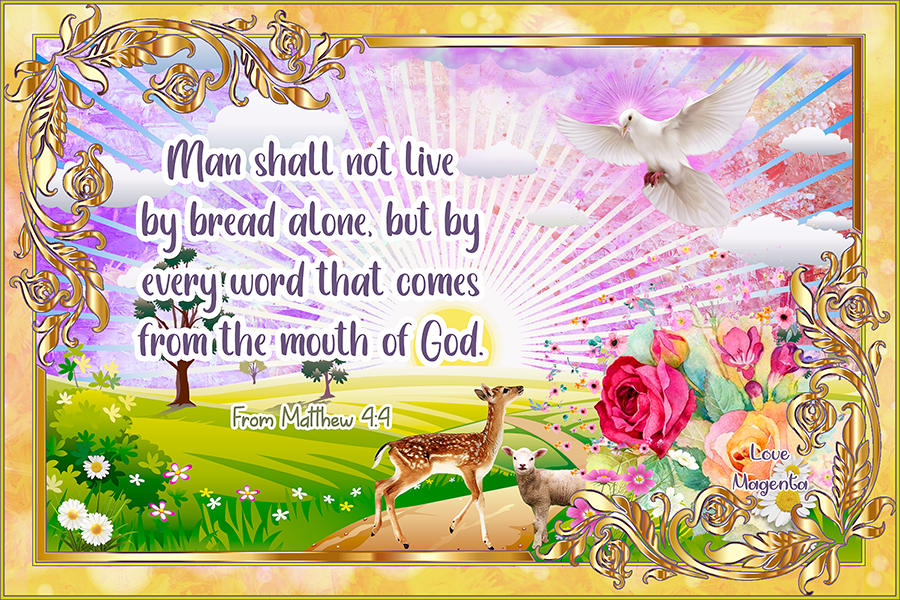
From-Matthew4-4s.png

From Matthew 4 verse 4 Man shall not live on bread alone, but on every word that comes from the mouth of God.
:)
I wonder when it says they shall it means they shall,

Cuz they way in seeing that is, it is by his will man shall live or man shall surely die. Like they did in the garden.

I wonder what @Blue155 makes of this.
 
Romans7-18-24a.png

Romans 7 verses 18-24a ~ I know that nothing good lives in me, that is, in my flesh; for I have the desire to do what is good, but I cannot carry it out. For I do not do the good I want to do. Instead, I keep on doing the evil I do not want to do. And if I do what I do not want, it is no longer I who do it, but it is sin living in me that does it. So this is the principle I have discovered: When I want to do good, evil is right there with me. For in my inner being I delight in God’s law. But I see another law at work in my body, warring against the law of my mind and holding me captive to the law of sin that dwells within me. What a wretched man I am! Who will rescue me from this body of death? Thanks be to God, through Jesus Christ our Lord!
 
The calvies focus on the problem and NEVER focus on the solution.

Mankind fell, we are LOST.

So He FIXED our problem. He sent us His word. Signs and wonders. Raised a nation/people to witness to the world. Sent us His only Son. Sent us His Spirit.

He SEEKS that which is lost.

Imagine telling your 7 kids......John 3:16 is only for a few elect. Odds are that a couple of you God hating, totally depraved rascals aren't on His "good" list.
Do the Calvinists realize that the Zacchaeus episode follows:

The Parable of the Pharisee and the Tax Collector

The episode of Jesus and the Rich Young Pharisee?

And do the Calvinists likewise understand that Luke chapters 18 and 19 obliterate and undo every dogmatic misapprehension that they vainly enshrine and revere?

Seems unlikely....☺️
 
In Philippians 4:3 Paul mentions “my fellowlabourers” “in the gospel,” and he names “Clement,” whose name he said was written “in the book of life…” History knows this man, who was Paul’s companion and who was endorsed by the Scriptures themselves, as Clement of Rome. Clement said, “It is therefore in the power of every one, since man has been made possessed of free-will, whether he shall hear us to life, or the demons to destruction.”[7] Clement said that “free-will” was given because “he who is good by his own choice is really good; but he who is made good by another under necessity is not really good, because he is not what he is by his own choice…”[8] Clement also said that the reason a sinner was susceptible to God’s punishment for their disobedience was because a sinner has the ability to obey God. He said, “For no other reason does God punish the sinner either in the present or in the future world, except because He knows that the sinner was able to conquer but neglected to gain the victory.”[9]

In the days of the Early Church, the debate between the freedom of man’s will vs. the total depravity of man’s nature was one of the major divisions between the early Christians and the Gnostic sects. Beausobre said, “…those ancient writers, in general, say that Manichaeans denied free-will. The reason is, that the Fathers believed, and maintained, against the Manichaeans, that whatever state man is in he has the command over his own actions, and has equally power to do good or evil.”[2] W. F. Hook said, “The Manichaeans so denied free will, as to hold a fatal necessity of sinning.”[3] Lyman Beecher said, “…the free will and natural ability of man were held by the whole church… natural inability was to that of the pagan philosophers, the Gnostic’s, and the Manichaeans.”

There were many different Gnostic groups in the days of early Christianity, who also denied the freedom of man’s will, such as Marcionism started by Marcion. But one of the greatest competitors and threats to the Early Church was the Manichaeans started by Manes, a Persian philosopher, also known as Mani.

The Early Church debated the founder of this Gnostic group in the Acta Archelai,” also known as “The Disputation with Manes.” Archelaus, a bishop in the Early Church, represented their doctrine that God does not make us with ruined natures but has given us free will. Mani took the Gnostic position that man’s nature was totally depraved and corrupted and that man did not have a free will.

The judges of the debate ruled in favor of Archelaeus and ruled against Mani, stating that man does in fact have free will as opposed to a depraved nature. The belief of early Christianity is stated in the debate in this way, “All the creatures that God made, He made very good. And He gave to every individual the sense of free will, by which standard He also instituted the law of judgment… our will is constituted to choose either to sin or not to sin… And certainly whoever will, may keep the commandments. Whoever despises them and turns aside to what is contrary to them, shall yet without doubt have to face this law of judgment… There can be no doubt that every individual, in using his own proper power of will, may shape his course in whatever direction he pleases.”[5]
did you write all this m.

Cuz you know the reason why freewill is born out of a sin nature is one of these reasons, going of what man says
 
In Philippians 4:3 Paul mentions “my fellowlabourers” “in the gospel,” and he names “Clement,” whose name he said was written “in the book of life…” History knows this man, who was Paul’s companion and who was endorsed by the Scriptures themselves, as Clement of Rome. Clement said, “It is therefore in the power of every one, since man has been made possessed of free-will, whether he shall hear us to life, or the demons to destruction.”[7] Clement said that “free-will” was given because “he who is good by his own choice is really good; but he who is made good by another under necessity is not really good, because he is not what he is by his own choice…”[8] Clement also said that the reason a sinner was susceptible to God’s punishment for their disobedience was because a sinner has the ability to obey God. He said, “For no other reason does God punish the sinner either in the present or in the future world, except because He knows that the sinner was able to conquer but neglected to gain the victory.”[9]

In the days of the Early Church, the debate between the freedom of man’s will vs. the total depravity of man’s nature was one of the major divisions between the early Christians and the Gnostic sects. Beausobre said, “…those ancient writers, in general, say that Manichaeans denied free-will. The reason is, that the Fathers believed, and maintained, against the Manichaeans, that whatever state man is in he has the command over his own actions, and has equally power to do good or evil.”[2] W. F. Hook said, “The Manichaeans so denied free will, as to hold a fatal necessity of sinning.”[3] Lyman Beecher said, “…the free will and natural ability of man were held by the whole church… natural inability was to that of the pagan philosophers, the Gnostic’s, and the Manichaeans.”

There were many different Gnostic groups in the days of early Christianity, who also denied the freedom of man’s will, such as Marcionism started by Marcion. But one of the greatest competitors and threats to the Early Church was the Manichaeans started by Manes, a Persian philosopher, also known as Mani.

The Early Church debated the founder of this Gnostic group in the Acta Archelai,” also known as “The Disputation with Manes.” Archelaus, a bishop in the Early Church, represented their doctrine that God does not make us with ruined natures but has given us free will. Mani took the Gnostic position that man’s nature was totally depraved and corrupted and that man did not have a free will.

The judges of the debate ruled in favor of Archelaeus and ruled against Mani, stating that man does in fact have free will as opposed to a depraved nature. The belief of early Christianity is stated in the debate in this way, “All the creatures that God made, He made very good. And He gave to every individual the sense of free will, by which standard He also instituted the law of judgment… our will is constituted to choose either to sin or not to sin… And certainly whoever will, may keep the commandments. Whoever despises them and turns aside to what is contrary to them, shall yet without doubt have to face this law of judgment… There can be no doubt that every individual, in using his own proper power of will, may shape his course in whatever direction he pleases.”[5]
He said, “For no other reason does God punish the sinner either in the present or in the future world, except because He knows that the sinner was able to conquer but neglected to gain the victory.”

Thus the many exhortations to be and become overcomers.
 
  • Like
Reactions: Blue155
Do the Calvinists realize that the Zacchaeus episode follows:

The Parable of the Pharisee and the Tax Collector

The episode of Jesus and the Rich Young Pharisee?

And do the Calvinists likewise understand that Luke chapters 18 and 19 obliterate and undo every dogmatic misapprehension that they vainly enshrine and revere?

Seems unlikely....☺️
who do you know who's a Calvinist ?

Have you ever met one who's actually called himself one.

I haven't met one England as all the people I know in the lord know it's wrong to exalt a mans name above God.

But you seem to do it all the time m in one way or another, your always exalting to yourself then your painting the picture it's others that are doing it.
 
He said, “For no other reason does God punish the sinner either in the present or in the future world, except because He knows that the sinner was able to conquer but neglected to gain the victory.”

The Scriptures support and proclaim the same from cover to cover....in the most overwhelming fashion.
Yes. The sinner was/is able to conquer [by the grace of God, Titus 2:11-12, the armor of God, Eph. 6], but neglected to gain the victory that is found in Christ (1 Cor. 15:57).
 
Yes. The sinner was/is able to conquer [by the grace of God, Titus 2:11-12, the armor of God, Eph. 6], but neglected to gain the victory that is found in Christ (1 Cor. 15:57).
if it's by the grace of God who's will is it m
 
In Philippians 4:3 Paul mentions “my fellowlabourers” “in the gospel,” and he names “Clement,” whose name he said was written “in the book of life…” History knows this man, who was Paul’s companion and who was endorsed by the Scriptures themselves, as Clement of Rome. Clement said, “It is therefore in the power of every one, since man has been made possessed of free-will, whether he shall hear us to life, or the demons to destruction.”[7] Clement said that “free-will” was given because “he who is good by his own choice is really good; but he who is made good by another under necessity is not really good, because he is not what he is by his own choice…”[8] Clement also said that the reason a sinner was susceptible to God’s punishment for their disobedience was because a sinner has the ability to obey God. He said, “For no other reason does God punish the sinner either in the present or in the future world, except because He knows that the sinner was able to conquer but neglected to gain the victory.”[9]

In the days of the Early Church, the debate between the freedom of man’s will vs. the total depravity of man’s nature was one of the major divisions between the early Christians and the Gnostic sects. Beausobre said, “…those ancient writers, in general, say that Manichaeans denied free-will. The reason is, that the Fathers believed, and maintained, against the Manichaeans, that whatever state man is in he has the command over his own actions, and has equally power to do good or evil.”[2] W. F. Hook said, “The Manichaeans so denied free will, as to hold a fatal necessity of sinning.”[3] Lyman Beecher said, “…the free will and natural ability of man were held by the whole church… natural inability was to that of the pagan philosophers, the Gnostic’s, and the Manichaeans.”

There were many different Gnostic groups in the days of early Christianity, who also denied the freedom of man’s will, such as Marcionism started by Marcion. But one of the greatest competitors and threats to the Early Church was the Manichaeans started by Manes, a Persian philosopher, also known as Mani.

The Early Church debated the founder of this Gnostic group in the Acta Archelai,” also known as “The Disputation with Manes.” Archelaus, a bishop in the Early Church, represented their doctrine that God does not make us with ruined natures but has given us free will. Mani took the Gnostic position that man’s nature was totally depraved and corrupted and that man did not have a free will.

The judges of the debate ruled in favor of Archelaeus and ruled against Mani, stating that man does in fact have free will as opposed to a depraved nature. The belief of early Christianity is stated in the debate in this way, “All the creatures that God made, He made very good. And He gave to every individual the sense of free will, by which standard He also instituted the law of judgment… our will is constituted to choose either to sin or not to sin… And certainly whoever will, may keep the commandments. Whoever despises them and turns aside to what is contrary to them, shall yet without doubt have to face this law of judgment… There can be no doubt that every individual, in using his own proper power of will, may shape his course in whatever direction he pleases.”[5]
Historically, therefore, what today skulks, hisses and slithers under the brand of Calvinistic super-determinism has its roots in gnostic and pagan pseudo-philosophical heresies.

Good to know....🤨

@HeIsHere will likewise be enlightened by your expose.
 
  • Like
Reactions: Blue155
if it's by the grace of God who's will is it m
It is His will, as His grace as appeared unto all me, teaching them how to live ( Titus 2:11-12; Romans. 6:1), but not all do His will (Mt. 7:21; Jn. 7:17)
 
I wonder when it says they shall it means they shall,

Cuz they way in seeing that is, it is by his will man shall live or man shall surely die. Like they did in the garden.

I wonder what @Blue155 makes of this.
It doesn’t matter what I make of it.
 
Yes. The sinner was/is able to conquer [by the grace of God, Titus 2:11-12, the armor of God, Eph. 6], but neglected to gain the victory that is found in Christ (1 Cor. 15:57).
I would be careful if I was you m, @cv5 will have you exalting yourself in no time, did you know if God goes against your will in mr cv5 eyes God is committing rape, do you know what that means m.

He saying the God that we share with you and the God that we worship is a rapist,