Why didn’t Jonah just jump off the boat?

  • Christian Chat is a moderated online Christian community allowing Christians around the world to fellowship with each other in real time chat via webcam, voice, and text, with the Christian Chat app. You can also start or participate in a Bible-based discussion here in the Christian Chat Forums, where members can also share with each other their own videos, pictures, or favorite Christian music.

    If you are a Christian and need encouragement and fellowship, we're here for you! If you are not a Christian but interested in knowing more about Jesus our Lord, you're also welcome! Want to know what the Bible says, and how you can apply it to your life? Join us!

    To make new Christian friends now around the world, click here to join Christian Chat.
Maybe Jonah couldn't swim, and the fish was God's way of saving him from drowning
In a sense, you’re right that the fish was God’s way of saving Jonah from drowning.

But the deeper truth is that God was saving Jonah from himself. The fish wasn’t punishment; it was mercy in motion. Jonah admitted guilt (Jonah 1:12), but he hadn’t yet repented. When he was swallowed, God preserved his life long enough for repentance to take place — “Out of the belly of hell cried I, and thou heardest my voice” (Jonah 2:2 KJV).

So yes — the fish kept Jonah from drowning physically, but more importantly, it kept him from dying spiritually in rebellion. God’s discipline was actually His grace.

Grace and Peace.
Acts 17:11 (KJV)
“These were more noble than those in Thessalonica, in that they received the word with all readiness of mind, and searched the scriptures daily, whether those things were so.”
 
In a sense, you’re right that the fish was God’s way of saving Jonah from drowning.

But the deeper truth is that God was saving Jonah from himself. The fish wasn’t punishment; it was mercy in motion. Jonah admitted guilt (Jonah 1:12), but he hadn’t yet repented. When he was swallowed, God preserved his life long enough for repentance to take place — “Out of the belly of hell cried I, and thou heardest my voice” (Jonah 2:2 KJV).

So yes — the fish kept Jonah from drowning physically, but more importantly, it kept him from dying spiritually in rebellion. God’s discipline was actually His grace.

Grace and Peace.
Acts 17:11 (KJV)
“These were more noble than those in Thessalonica, in that they received the word with all readiness of mind, and searched the scriptures daily, whether those things were so.”

I think you're reading into it more than is there. I don't think Jonah would have been lost had he refused to go to Nineveh.

The point of the story seems to me to be that God was foretelling that the salvation of Israel would not be in its continued existence in a state of disobedience, but in the one who spent 3 days and nights in the belly of the earth. Jonah was angry that Nineveh repented; he wanted it destroyed because he knew in his spirit that it was a threat to Israel's existence, which Jonah was trying to preserve. But Nineveh repented and was not destroyed, and in less than 100 years it destroyed Israel .
 
  • Like
Reactions: Me_Clay
I think you're reading into it more than is there. I don't think Jonah would have been lost had he refused to go to Nineveh.

The point of the story seems to me to be that God was foretelling that the salvation of Israel would not be in its continued existence in a state of disobedience, but in the one who spent 3 days and nights in the belly of the earth. Jonah was angry that Nineveh repented; he wanted it destroyed because he knew in his spirit that it was a threat to Israel's existence, which Jonah was trying to preserve. But Nineveh repented and was not destroyed, and in less than 100 years it destroyed Israel .

That’s an interesting perspective, and I agree that Jonah’s story ultimately foreshadows Christ — “For as Jonas was three days and three nights in the whale’s belly…” (Matthew 12:40 KJV). But I think we have to be careful not to miss the plain sense of the text before jumping to the prophetic layer.

Jonah’s disobedience put him under God’s discipline, not because he threatened Israel’s destiny, but because he was running from God’s direct command. The storm and the fish weren’t about national preservation — they were about personal repentance. God could have easily raised up another prophet; He chose to restore Jonah because mercy is at the center of His character.

And you’re right — Nineveh’s repentance spared it for a time, and about a century later they turned back to wickedness and faced judgment (see Nahum 1:1–3). But that actually reinforces the lesson: God’s mercy delays judgment, but doesn’t cancel it for the unrepentant.

So while the story points to Christ, it also stands as a timeless reminder that God desires obedience and repentance more than self-preservation — whether for a prophet, a nation, or any of us.

Grace and Peace.
 
If Jonah knew he was the cause of the storm, then why not just jump off the ship, instead of requiring the sailors to throw him over?

They had asked what they could do to him to calm the sea

“Then said they unto him, What shall we do unto thee, that the sea may be calm unto us? for the sea wrought, and was tempestuous.”
‭‭Jonah‬ ‭1:11‬ ‭

so he answers what they could do to calm the sea

“And he said unto them, Take me up, and cast me forth into the sea; so shall the sea be calm unto you: for I know that for my sake this great tempest is upon you.”
‭‭Jonah‬ ‭1:12‬ ‭KJV‬‬

We know he was fleeing in fear so maybe he was just afraid yet answered then honestly .also If I had to jump into a raging sea I might tell others to throw me in because I’m not able to for fear of drowning. Maybe it was just fear and honestly mixed together
 
He didn't want to get wet ya know.

Jokes aside, that was a good question.

Romans 8:28 And we know that all things work together for good to them that love God, to them who are the called according to his purpose.

Even Jonah strong defiant, he was called according to His purpose. God use him to witness to the shipmaster and other men.

Glory to our God.
Amen
 
In a sense, you’re right that the fish was God’s way of saving Jonah from drowning.

But the deeper truth is that God was saving Jonah from himself. The fish wasn’t punishment; it was mercy in motion. Jonah admitted guilt (Jonah 1:12), but he hadn’t yet repented. When he was swallowed, God preserved his life long enough for repentance to take place — “Out of the belly of hell cried I, and thou heardest my voice” (Jonah 2:2 KJV).

So yes — the fish kept Jonah from drowning physically, but more importantly, it kept him from dying spiritually in rebellion. God’s discipline was actually His grace.

Grace and Peace.
Acts 17:11 (KJV)
“These were more noble than those in Thessalonica, in that they received the word with all readiness of mind, and searched the scriptures daily, whether those things were so.”

It was a prophetic sign God was giving, which Christ referred to, while the miracle of Jonah returning to the land of the living after being swallowed up was being shown through that, and it gave Jonah motivation to go to Nineveh as God would direct him to do, and preach to humans and animals there, for the response he did not want coming to being shown.
 
In a sense, you’re right that the fish was God’s way of saving Jonah from drowning.

But the deeper truth is that God was saving Jonah from himself. The fish wasn’t punishment; it was mercy in motion. Jonah admitted guilt (Jonah 1:12), but he hadn’t yet repented. When he was swallowed, God preserved his life long enough for repentance to take place — “Out of the belly of hell cried I, and thou heardest my voice” (Jonah 2:2 KJV).

So yes — the fish kept Jonah from drowning physically, but more importantly, it kept him from dying spiritually in rebellion. God’s discipline was actually His grace.

Grace and Peace.
Acts 17:11 (KJV)
“These were more noble than those in Thessalonica, in that they received the word with all readiness of mind, and searched the scriptures daily, whether those things were so.”

Jonah appears to have died in the whale "
Jon 2:2
And said, I cried by reason of mine affliction unto the LORD, and he heard me; out of the belly (BeTeN) of hell (Shge'oL) cried I, and thou heardest my voice.
Jon 2:6
I went down to the bottoms of the mountains; the earth ('eReTs) with her bars (B- RiHeYaH) was about me (Be'aDiY) for ever: yet hast thou brought up my life from corruption, O LORD my God.

Jonah was under the earth, not above the earth, under the sea.

Note, Jonah went into the belly of the whale alive, remained alive fopr some time, and then died, then was revived and then delivered out of the whale. The whale in Jesus' prophecy is the unclean human political system. The belly of the whale was the heart of the land. The heart of the land of Judah was the temple mount. Jesus was arrested and placed in custody in the heart of the political system within Judah (Mount Zion, the temple mount). He survived there for for some time and then died, as did Jonah. He went to hades, as did Jonah. His soul cried out to God from Hades, as did Jonah. God revived Him, as He did Jonah. He was delivered from imprisonment on the temple mount after His meeting with Mary Magdalene in the garden, after which He ascended to His Father and her Father, to His God and her God. John 20:17 He must have ascended then because when He appeared to the women on their way to the disciples, they took hold of His feet and worshipped, and He did not stop them doing so that time.

So, swallowed by the whale when taken from Gethsemane back to the temple mount on Thursday midnight. And leaving the temple mount when ascending to the Father in the morning on Resurrection Sunday. Three days and three nights in the belly of the whale, the heart of the land.
 
Jonah appears to have died in the whale "
Jon 2:2
And said, I cried by reason of mine affliction unto the LORD, and he heard me; out of the belly (BeTeN) of hell (Shge'oL) cried I, and thou heardest my voice.
Jon 2:6
I went down to the bottoms of the mountains; the earth ('eReTs) with her bars (B- RiHeYaH) was about me (Be'aDiY) for ever: yet hast thou brought up my life from corruption, O LORD my God.

Jonah was under the earth, not above the earth, under the sea.

Note, Jonah went into the belly of the whale alive, remained alive fopr some time, and then died, then was revived and then delivered out of the whale. The whale in Jesus' prophecy is the unclean human political system. The belly of the whale was the heart of the land. The heart of the land of Judah was the temple mount. Jesus was arrested and placed in custody in the heart of the political system within Judah (Mount Zion, the temple mount). He survived there for for some time and then died, as did Jonah. He went to hades, as did Jonah. His soul cried out to God from Hades, as did Jonah. God revived Him, as He did Jonah. He was delivered from imprisonment on the temple mount after His meeting with Mary Magdalene in the garden, after which He ascended to His Father and her Father, to His God and her God. John 20:17 He must have ascended then because when He appeared to the women on their way to the disciples, they took hold of His feet and worshipped, and He did not stop them doing so that time.

So, swallowed by the whale when taken from Gethsemane back to the temple mount on Thursday midnight. And leaving the temple mount when ascending to the Father in the morning on Resurrection Sunday. Three days and three nights in the belly of the whale, the heart of the land.
If Jonah was dead in the big fish, how did he pray?

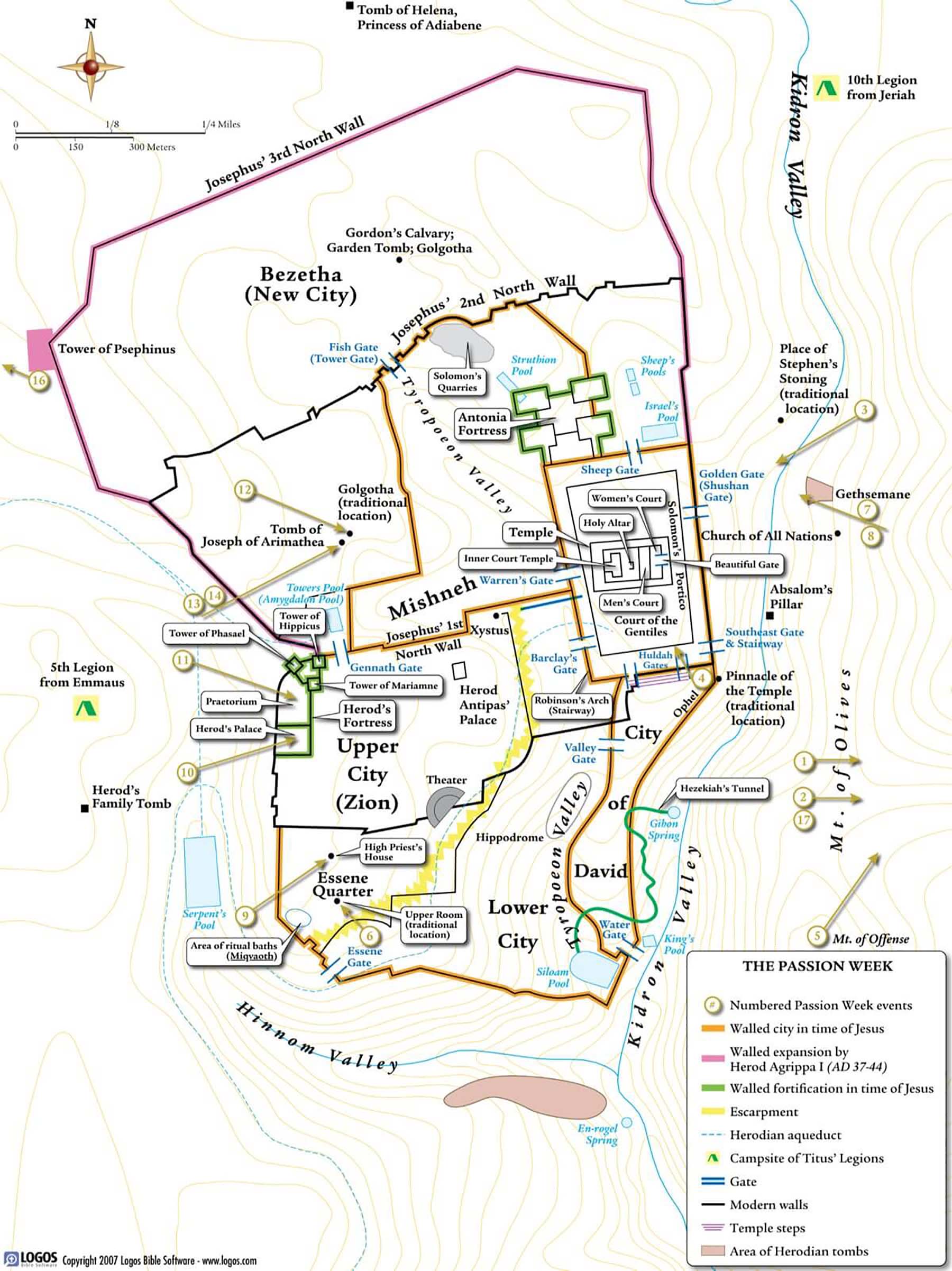
What biblical reason do you have for your idea that the big fish is the unclean human political system? Where do you read that Jesus cried out to His Father from Hades? Where do you read that Jesus was placed in custody in the temple mount? Rather, He was taken to Herod's palace:

1768035406783.png

Where does the bible say that He was "delivered from imprisonment on the temple mount after His meeting with Mary Magdalene in the garden?"
 
If Jonah was dead in the big fish, how did he pray?
His body could be dead but His soul conscious in hades and praying.

What biblical reason do you have for your idea that the big fish is the unclean human political system?

Leviticus 11:9-12 and Deuteronomy 14:9-10 state that any sea creature without fins and scales is unclean and not to be eaten, effectively making large marine mammals like whales, dolphins, and porpoises (which lack scales) unclean for consumption under Old Testament law. And political powers are often represented as kinds of beasts.

The Bible describes political powers as beasts primarily in the prophetic books of Daniel and Revelation. This imagery highlights the often brutal, oppressive, and chaotic nature of human empires from a divine perspective, contrasting them with God's eternal kingdom. Dan 7:4-7, Rev 13 and 17

Where do you read that Jesus cried out to His Father from Hades?

Psalm 18.

Where do you read that Jesus was placed in custody in the temple mount? Rather, He was taken to Herod's palace:

On your map, Herod's palace is on the temple mount. As was Pilate's residence.

Pilate's residence in Jerusalem, known as the Praetorium, was primarily Herod the Great's Palace in the western part of the Upper City, near the current-day Citadel, serving as his headquarters during visits, though some traditions linked it to the Antonia Fortress or Hasmonean Palace, but archaeological evidence supports Herod's Palace as the main site where Jesus' trial occurred on its stone-paved courtyard (Gabbatha).

View attachment 284143

Where does the bible say that He was "delivered from imprisonment on the temple mount after His meeting with Mary Magdalene in the garden?"

John 20:19-20 Jesus saith unto her, Touch me not; for I am not yet ascended to my Father: but go to my brethren, and say unto them, I ascend unto my Father, and your Father; and to my God, and your God. Mary Magdalene came and told the disciples that she had seen the Lord, and that he had spoken these things unto her.

and Matt 28:7-10 And go quickly, and tell his disciples that he is risen from the dead; and, behold, he goeth before you into Galilee; there shall ye see him: lo, I have told you. And they departed quickly from the sepulchre with fear and great joy; and did run to bring his disciples word. And as they went to tell his disciples, behold, Jesus met them, saying, All hail. And they came and held him by the feet, and worshipped him. Then said Jesus unto them, Be not afraid: go tell my brethren that they go into Galilee, and there shall they see me.
 
His body could be dead but His soul conscious in hades and praying.

But we are not told that Jonah died in the fish.

Leviticus 11:9-12 and Deuteronomy 14:9-10 state that any sea creature without fins and scales is unclean and not to be eaten, effectively making large marine mammals like whales, dolphins, and porpoises (which lack scales) unclean for consumption under Old Testament law. And political powers are often represented as kinds of beasts.

Those verses are about unclean foods, not unclean political powers. Anyway, the word in Jonah for the creature that swallowed him means "big fish," not "whale." Fish do have fins and scales, so are not unclean.

The Bible describes political powers as beasts primarily in the prophetic books of Daniel and Revelation. This imagery highlights the often brutal, oppressive, and chaotic nature of human empires from a divine perspective, contrasting them with God's eternal kingdom. Dan 7:4-7, Rev 13 and 17

But none of those verses describe political powers as big fish.

Psalm 18.

Granted, verse 5 of that psalm says:

The sorrows of Sheol surrounded me; The snares of death confronted me.

It doesn't say that the Psalmist or the Saviour was actually in Sheol.

On your map, Herod's palace is on the temple mount. As was Pilate's residence.

Pilate's residence in Jerusalem, known as the Praetorium, was primarily Herod the Great's Palace in the western part of the Upper City, near the current-day Citadel, serving as his headquarters during visits, though some traditions linked it to the Antonia Fortress or Hasmonean Palace, but archaeological evidence supports Herod's Palace as the main site where Jesus' trial occurred on its stone-paved courtyard (Gabbatha).

View attachment 284143

I agree that the map was not the clearest. Here is a better one:

maps-jerusalem-33AD.jpg

It seems as though Herod's palace was next to the Praetorium, but not to the temple.

John 20:19-20 Jesus saith unto her, Touch me not; for I am not yet ascended to my Father: but go to my brethren, and say unto them, I ascend unto my Father, and your Father; and to my God, and your God. Mary Magdalene came and told the disciples that she had seen the Lord, and that he had spoken these things unto her.

and Matt 28:7-10 And go quickly, and tell his disciples that he is risen from the dead; and, behold, he goeth before you into Galilee; there shall ye see him: lo, I have told you. And they departed quickly from the sepulchre with fear and great joy; and did run to bring his disciples word. And as they went to tell his disciples, behold, Jesus met them, saying, All hail. And they came and held him by the feet, and worshipped him. Then said Jesus unto them, Be not afraid: go tell my brethren that they go into Galilee, and there shall they see me.
But those verses you have quoted don't say that He was "delivered from imprisonment on the temple mount after His meeting with Mary Magdalene in the garden."
 
Sounds to be a cultist theology.

I agree, @Jaumel. @DavidLamb sounds like he is trapped in some cultist theology. He posts a map showing Herod's palace, Herod Anyipas' palace, the Praetorium, the High priest's house, Golgotha and the tomb of Joseph of Arimathea's tomb, all situated on the temple mount. We know that Jesus was arrested and brought to the temple mount from Gethsemane and did not leave the temple mount until He had resurrected.

We also know that Jesus told Mary Magdalene on Resurrection Sunday morning not to cling to Him for the reason that He had not yet ascended to His Father, and that Jesus told Mary to tell the disciples that Jesus was ascending to His God and Father, and to their God and Father. And we know that when Jesus appeared to the other women who had left the garden before Mary Magdalene saw Jesus, those women grasped Jesus' feet and He did not stop them. So, clearly, Jesus must have been to the Father between His meeting with Mary Magdalene and His meeting with the other women. And yet, despite all this evidence, @DavidLamb insists that Jesus must have left the temple mount because He was taken to a series of [laces that are all on the temple mount. And @DavidLamb insists that we are not told that Jesus ascended to the Father between those two encounters.

That kind of ideological denial is very cultist.
 
If Jonah knew he was the cause of the storm, then why not just jump off the ship, instead of requiring the sailors to throw him over?
I wonder if he couldn't swim, and he was like, 'Guys, I just can't do it. You're going to have to throw me off the boat." But that is pure speculation.
 
If Jonah knew he was the cause of the storm, then why not just jump off the ship, instead of requiring the sailors to throw him over?
Jonah basically prophesied that , if the men would cast him into the sea , the sea would become calm . Jonah chapter 1 verse 16 , what do those men do after they have witnessed this miracle that can only have come from God Himself ? Then the men feared the LORD exceedingly , and offered a sacrifice unto the LORD , and made vows . Jonah gave God the glory and so did the men . They were part of one of God's miracles , they acknowledged that God calmed the sea and feared God and would have told lots of other people about this miracle that God did . They all gave God the glory 👍 . If Jonah had just thrown himself into the sea then the men would not have acted in faith by believing Jonah's prophecy and they probably wouldn't have glorified God .
All of this miracle came from God , Jonah knew it and so did the other men . That wouldn't have been the case if Jonah had not prophesied and the men hadn't believed and acted in faith . Always give God the glory for every good thing ❤️