Righteousness

  • Christian Chat is a moderated online Christian community allowing Christians around the world to fellowship with each other in real time chat via webcam, voice, and text, with the Christian Chat app. You can also start or participate in a Bible-based discussion here in the Christian Chat Forums, where members can also share with each other their own videos, pictures, or favorite Christian music.

    If you are a Christian and need encouragement and fellowship, we're here for you! If you are not a Christian but interested in knowing more about Jesus our Lord, you're also welcome! Want to know what the Bible says, and how you can apply it to your life? Join us!

    To make new Christian friends now around the world, click here to join Christian Chat.
So when Paul said for you to put the works of the flesh to death else you die, he really meant God?
No. He meant you die in the sense that you become separated from God and cannot enjoy the abundant life Jesus came to bring.
We have the responsibility as Christians to live godly; however, this is not accomplished in our own strength. It is accomplished as we surrender to Christ. I live, yet not I; Christ liveth in me. This is the essence of abiding in Christ and walking in the Spirit. We do our best; we allow Christ to do His best in us.
 
No. He meant you die in the sense that you become separated from God and cannot enjoy the abundant life Jesus came to bring.
We have the responsibility as Christians to live godly; however, this is not accomplished in our own strength. It is accomplished as we surrender to Christ. I live, yet not I; Christ liveth in me. This is the essence of abiding in Christ and walking in the Spirit. We do our best; we allow Christ to do His best in us.

Yet Christ said that those who call him lord, but don't do his will won't enter his kingdom. I would equate not doing his will with doing works of the flesh. In other words, disobedience disqualifies one from eternal life rather than merely temporal abundant life.
 
Yet Christ said that those who call him lord, but don't do his will won't enter his kingdom. I would equate not doing his will with doing works of the flesh. In other words, disobedience disqualifies one from eternal life rather than merely temporal abundant life.
You can be wrong if you like.
 
lol not good enough for what? Justification? Duh. I'm already justified so there's nothing left to do in that regard.

Not good enough for sanctification? Ridiculous. Any and every believer can keep their vessels clean if they so choose. But if they think they are totally disabled and haven't been given the ability to do that, well then it's as they say, use it or lose it.
Your God is too small.
 
Yeah that reveals who he's talking about, ie people that honor him with their lips, but their heart is far from him, ie, they don't do what he says, but it doesn't state what specifically they are doing wrong.
It actually does. First, they weren't trusting in the work of Jesus but on their own works...have we not?...
Second, they never knew Jesus, and He never knew them. As eternal life is knowing God and Christ...John 17:3...they never possessed eternal life, and believed, like the Pharisees, that eternal life consisted in activity, and not relationship.
 
It actually does. First, they weren't trusting in the work of Jesus but on their own works...have we not?...
Second, they never knew Jesus, and He never knew them. As eternal life is knowing God and Christ...John 17:3...they never possessed eternal life, and believed, like the Pharisees, that eternal life consisted in activity, and not relationship.

Knowing God is keeping his commandments. So essentially you're agreeing with me that they are rejected because they don't obey Christ

And by this we know that we have known him– if the commandments of his we keep. The one saying, I know him, and his commandments is not keeping, is a liar, and the truth is not in this one. 1 John 2:3-4
 
  • Like
Reactions: Soyeong
Knowing God is keeping his commandments. So essentially you're agreeing with me that they are rejected because they don't obey Christ

And by this we know that we have known him– if the commandments of his we keep. The one saying,
I know him, and his commandments is not keeping, is a liar, and the truth is not in this one. 1 John 2:3-4
Which commandments? 613? 10? 9? The greatest?

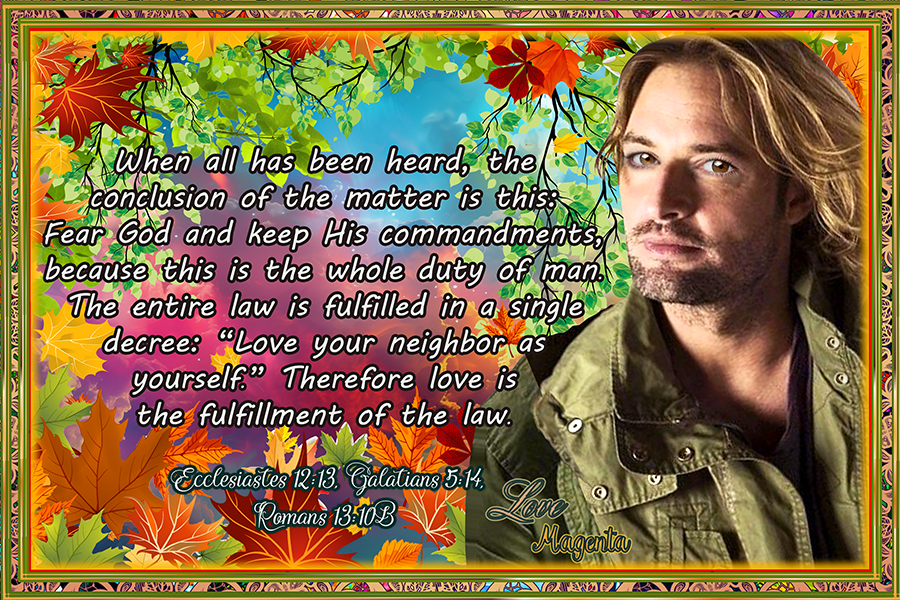
Galatians5-14-Ecclesiastes12-13-Romans13-10be.png

Ecclesiastes 12 v 13, Galatians 5 v 14, Romans 13 v 10b ~ When all has been heard, the conclusion of the matter is this: Fear God and keep His commandments, because this is the whole duty of man. The entire law is fulfilled in a single decree: “Love your neighbor as yourself.” Therefore love is the fulfillment of the law.
 
Which commandments? 613? 10? 9? The greatest?

Ecclesiastes 12 v 13, Galatians 5 v 14, Romans 13 v 10b ~ When all has been heard, the conclusion of the matter is this: Fear God and keep His commandments, because this is the whole duty of man. The entire law is fulfilled in a single decree: “Love your neighbor as yourself.” Therefore love is the fulfillment of the law.

Doing what Christ says.
 
No. He meant you die in the sense that you become separated from God and cannot enjoy the abundant life Jesus
came to bring. We have the responsibility as Christians to live godly; however, this is not accomplished in our own
strength. It is accomplished as we surrender to Christ. I live, yet not I; Christ liveth in me. This is the essence of
abiding in Christ and walking in the Spirit. We do our best; we allow Christ to do His best in us.
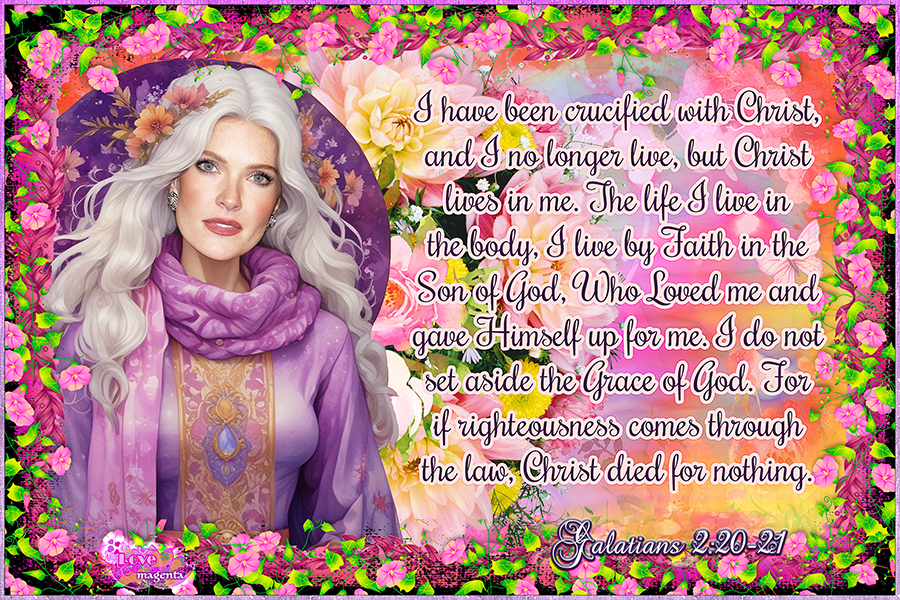
Galatians2-20-21.png

Galatians 2 v 20-21 I have been crucified with Christ, and I no longer live, but Christ lives in me. The life I live in the body, I live by Faith in the Son of God, Who Loved me and gave Himself up for me. I do not set aside the Grace of God. For if righteousness comes through the law, Christ died for nothing.
:)
 
Righteousness is simplified or summarized in the NT by the trait of love (Matt. 22:37-40, John 13:34-35, Rom. 5:5, Gal. 5:6).
For example, it is righteous to do charity, it is an act of love to do charity, and the same can be said for all of God’s other laws, so while the fact that all of God’s laws are about the way to love simplifies our understanding of what God’s laws are essentially about, it does not simplify the way to love. Moreover, everything that I said about character traits also applies to love.
 
The purpose of this thread is to discuss the basics of what it means to attain character trait, what it means to have a character trait, and then to understand what the Bible specifically says about the trait of righteousness in a way that does not depart from the simplicity of that framework.

Character traits are not earned as the result of our works but rather they are embodied through our works. The one and only way to attain a character trait is through faith apart from being required to have first done enough works in order to earn it as the result, but what it means to attain a character trait is to become a doer of works that embody that trait, so it would contradictory for to attain a character trait apart from becoming a doer of that trait. More specifically, the faith by which a character trait is attained is the belief that we ought have our lives directed at being a doer of works that embody that trait.

We embody what we believe to be true about who God is through our works, such as with James 2:18saying that he would show his faith through his works. In other words, the way to believe in God is by believing that we ought to have our lives directed at embody His likeness through being a doer of His character traits. For example, by being a doer of good works in obedience to God we are embodying His goodness, which is why our good works bring glory to Him (Matthew 5:16), and by embodying God's goodness we are also expressing the belief that God is good. Likewise, the way to believe that God is compassionate is by being compassionate, the way to believe that God is a doer of justice is by being a doer of justice, the way to believe that God is holy is by being a doer of His instructions for how to be holy as He is holy, and so forth. This is exactly the way to believe in the Son, who is the radiance of God's glory and the exact likeness of His character (Hebrews 1:3), which he embodied through his works by setting an example for us to follow of how to walk in obedience to God's law, and it is by that faith alone that we attain the character traits of God.

While it is true that Abraham believed God, so he was declared righteous (Genesis 15:6), it is also true that he believed God, so he was a doer of righteous works (Genesis 18:19), so the faith by which he was declared righteous was also embodied through his works, but he did not earn his righteousness as the result of his works (Romans 4:1-5). In James 2:21-24, it quotes Genesis 15:6 to support saying that Abraham was declared righteous by his works when he offered Isaac, that his faith was active along with his works, and his faith completed his works, so he was declared righteous by his works insofar as they embodied his faith but not insofar as they were earning a wage. In 1 John 3:7, everyone who is a doer of righteous works is righteous even as they are righteous, so while we do not earn our righteousness as the result of our works, there is is no such thing as someone being righteous apart from being a doer of righteous works, but rather the content of the gift of being imputed with the righteousness of God is getting to become a doer of righteous works.


This is one of the most confusing ops I have seen in this forum and that is saying something. Where do people assume they can do a mashup of scripture and then conflate it all and come up with something that is so far distant from scripture as to create total confusion that is most likely a reflection of the character 'traits' it seeks to discuss.

The author does not reflect a point of salvation but claims to have grown up as one.:unsure:
 
This is one of the most confusing ops I have seen in this forum and that is saying something. Where do people assume they can do a mashup of scripture and then conflate it all and come up with something that is so far distant from scripture as to create total confusion that is most likely a reflection of the character 'traits' it seeks to discuss.

The author does not reflect a point of salvation but claims to have grown up as one.:unsure:
None of it surprising for one as the O|P who believes the 613 Mitzvot are written on our hearts .:censored: