Komentaza wrote in 4040:
If someone can explain these verses and verse similar to this like Colossians 1:23 and all the warning passages and passages about falling away and all the 'if' verses I will embrace the TULIP right now.
Not a joke challenge.
Why does the Bible say 'if' so many times and have so many exhortations to
-not become apostate
-to not let any bitterness spring up in your hearts
-persevere in the faith
-many if statements.
Do the calvinists have a good response to these? I can understand and appreciate what they are saying. Glory to God alone in salvation. But what about these?
Welcome to the thread.
To answer your question as briefly as I can, I'll use the title to a classic work on the Christian life that was written by the late Francis Schaeffer (a Calvinist):
"How Shall We Then Live?", as springboard. To follow up on this question, we could also reasonably ask:
Who or what should inform how we live our Christian life?
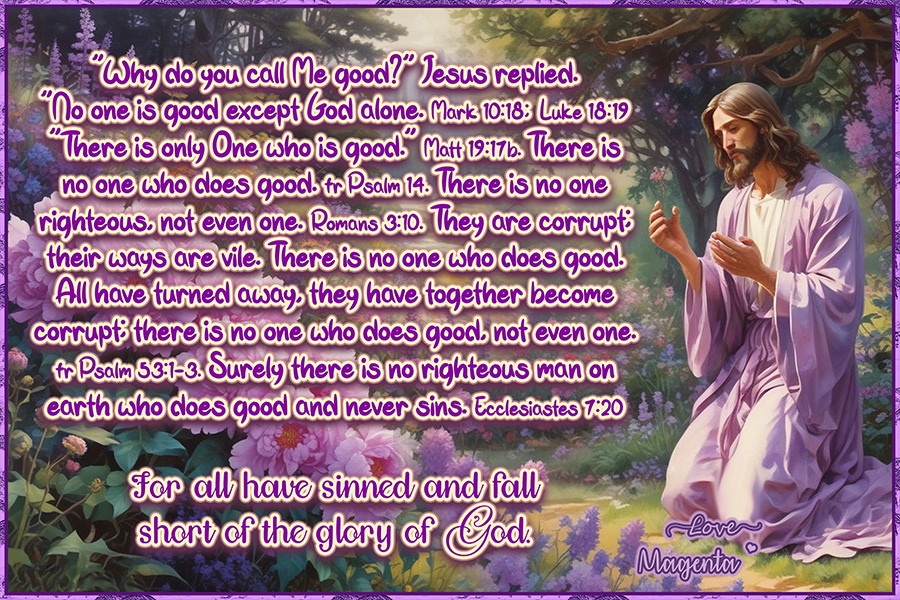
We dare not compare ourselves against our fellow man since we would inevitably judge unrighteously, but even worse we don't want to fall under God's curse for going that route (Jer 17:5).
Nor do we want to place trust in ourselves or our own judgment since man's heart is utterly deceitful (Jer 17:9). All mankind is generally untrustworthy. Even our own consciences are corrupt and cannot be our infallible guide. And we can see this truth plainly in the real world, since neither civil authorities nor the private sectors throughout this fallen world operate on the honor system. Rather, the universal principle (law) that we witness is one of
DISTRUST. Mankind is inherently untrustworthy! (If you're interested I wrote some on this universal law in my 2,771 on 7/14 since some here are pretty dismissive of Jer 17:9)
The only option left is to trust in God (Jer 17:7). God revealed his holy, perfect will in scripture. The Gold Standard, therefore, is God's Word. His Word is the only infallible, authoritative standard for judging ourselves. By using another standard, we would definitely fall short just on the basis of an inferior standard alone.
Therefore, all the conditional statements, sobering exhortations and chilling warnings are designed to
test ourselves against God's Word. We are called to
examine ourselves to see if we're in the [revealed objective] faith (1Cor 11:28; 2Cor 13:5). It's no accident that both of these exhortations are found in a church that had more than its share of spiritual problems. But there's also a lot of irony in these two passages since the Lord himself told Paul that He had "many people" in Corinth (Act 18:7-10), which is why Paul ministered there for so long.
Another reason for examining ourselves is the Sheep metaphor. Sheep aren't the brightest animals on this planet, nor are they high up on the food chain, nor are they swift of foot. And Sheep are a lot like lost human beings and can be their own worst enemy since they have this strong proclivity to stray from their shepherds and the flock (Isa 53:6). Sheep, therefore, are
helpless and need to be under the constant care and watch of the Good Shepherd who will
rescue a lost sheep. (For your info Freewill Theology is totally dismissive of the dire and helpless state of mankind.)
To sum up, then, all these dire warnings and conditional statements in scripture are God's gracious way to get us to examine ourselves for our own good. Both "backsliders" and pious, God-fearing saints benefit from these kinds of texts. A repentant backslider (a wayward sheep) benefits because God has put the fear of himself in that person and turned him away from his sin; likewise a godly person benefits because his heart is filled with praise and thanksgiving to the Lord for the gift of His precious, persevering grace that has kept him on the narrow path to Life. Moreover, such texts can be beneficial to someone who has been living under the delusion of biblical faith but in reality deceived himself into believing his faith was genuine. God can use such a text to get this person, too, to come to his senses, repent and believe the gospel.
In a separate post, I'll to beam up a copy of Charles Spurgeon's meditation for today which, providentially, is appropriate for this topic. If you have any questions, feel free to ask.